Posture exercises for seniors can help you stand taller, move more comfortably, and feel steadier on your feet. Years of sitting, desk work, and gradual muscle loss can pull the shoulders forward and round the upper back. With gentle, regular strengthening, the muscles that hold you upright can get stronger again.
Good posture is not about standing stiffly. It is about having enough strength in your upper back, shoulders, and core to hold a comfortable, balanced position all day. Better alignment can also support easier breathing, ease neck and back strain, and improve balance.
Why Posture Changes After 60
With age, the muscles of the upper back and hips tend to weaken while the chest and front of the shoulders tighten. The result is a forward head and a rounded upper back. Because posture shifts your center of gravity, it also affects stability, which is why posture work belongs in any fall prevention and strength building program.
5 Posture Exercises for Seniors
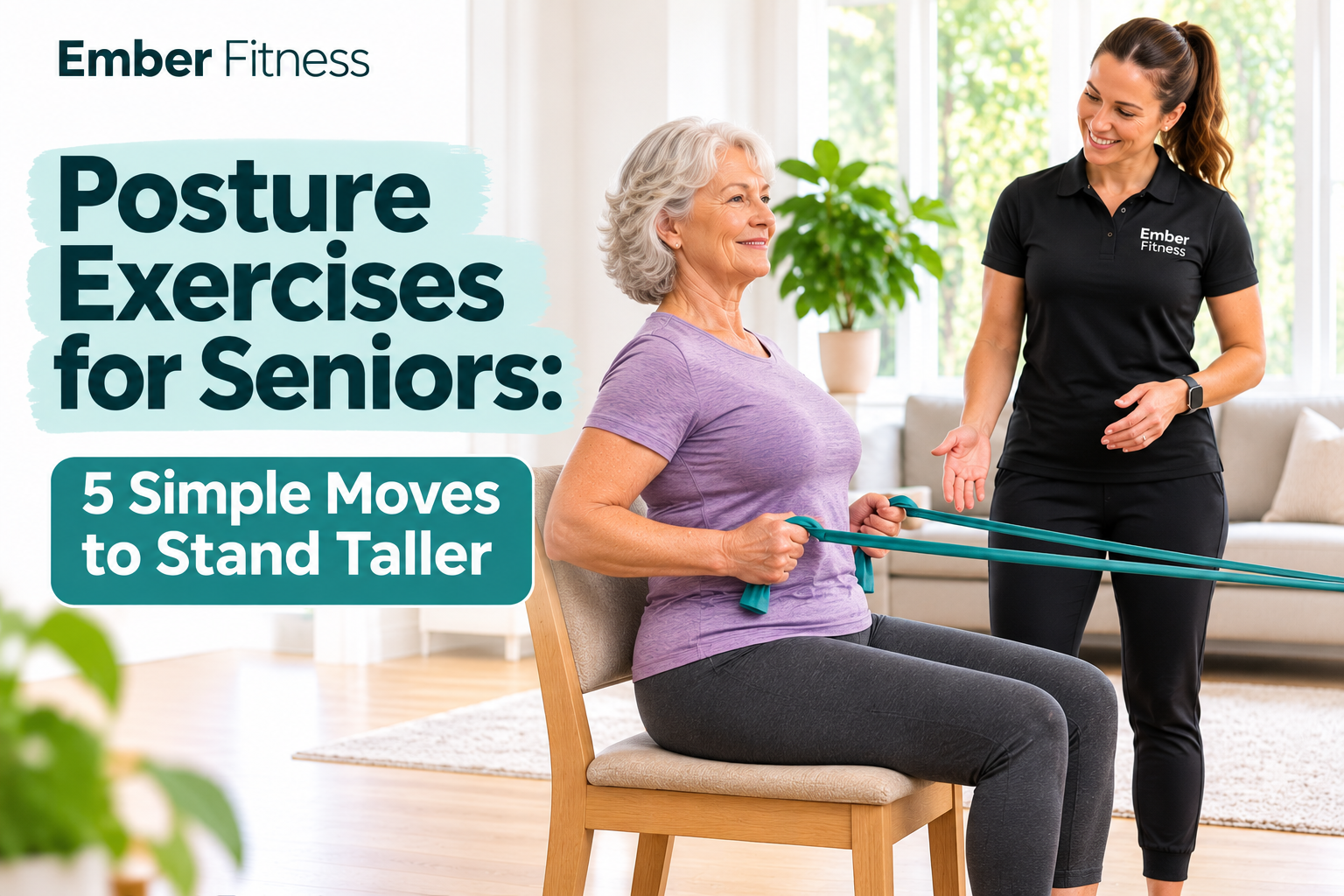
These posture exercises for seniors can be done at home with a sturdy chair and a light resistance band. Move slowly and stop if anything hurts.
1. Seated Resistance Band Row
Sit tall with the band anchored in front of you. Pull your elbows back, squeeze your shoulder blades together, and return slowly. Do 8 to 10 repetitions.
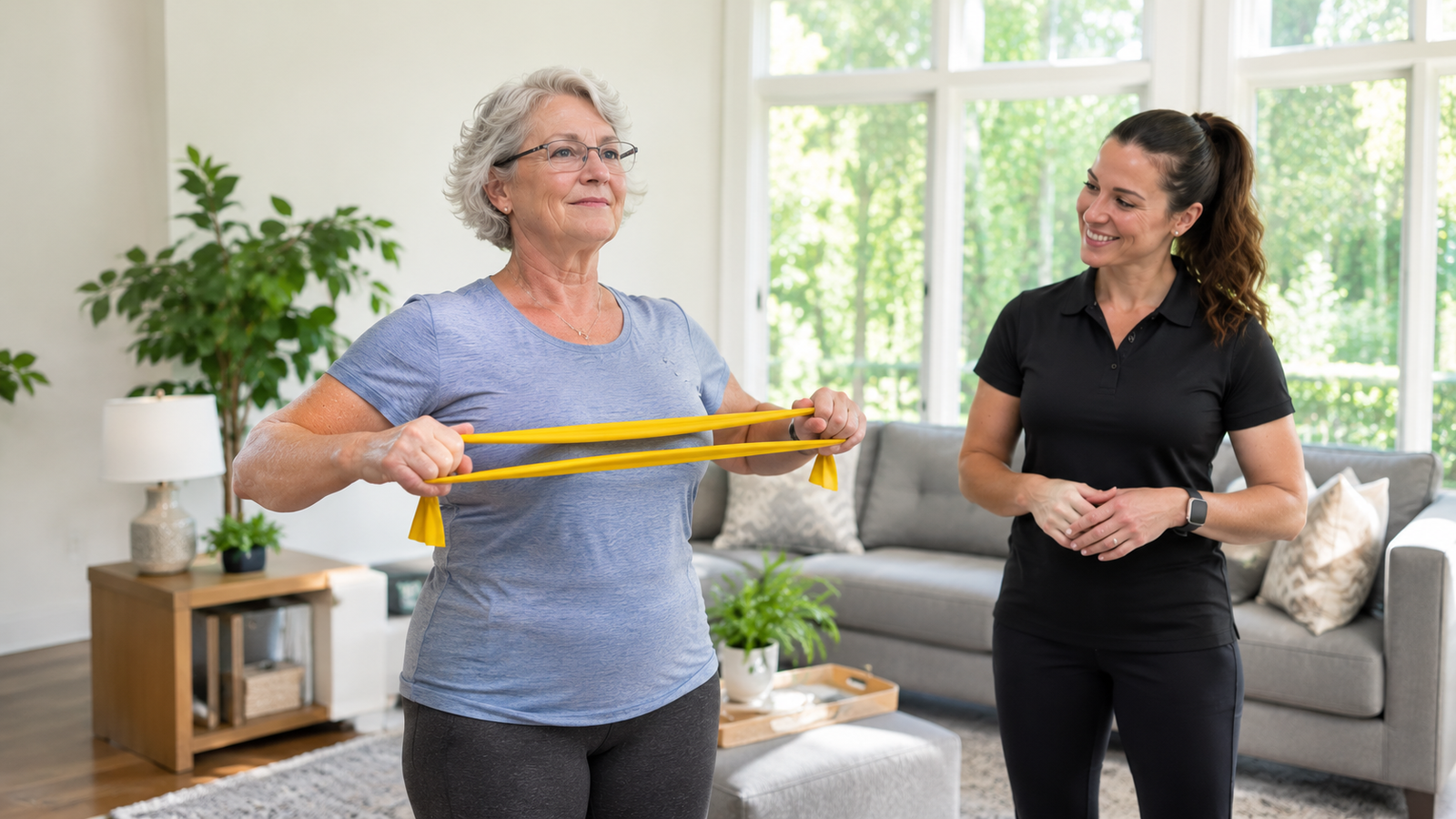
2. Shoulder Blade Squeeze
Sit or stand tall, hold the band at chest height, and gently draw your shoulder blades toward each other. Hold for two seconds, then release. This wakes up the upper back muscles that keep you upright.
3. Wall Slide
Stand with your back against a wall and your arms bent at your sides. Slide your arms up and down as far as feels comfortable while keeping your back supported.
4. Chin Tuck
Sit tall and gently draw your chin straight back, as if making a double chin. Hold for three seconds. This eases the forward head position that strains the neck.
5. Supported Standing Posture Reset
Stand with your heels, hips, and shoulders near a wall. Stand tall, breathe in, and hold for 10 to 20 seconds. Use it as a daily check-in on your alignment.
Important: Stop if you feel sharp pain, dizziness, or numbness. Check with your doctor before starting new exercises, especially if you have osteoporosis, a spinal condition, or recent surgery.
| Exercise | Main benefit |
|---|---|
| Seated band row | Strengthens the upper back |
| Shoulder blade squeeze | Pulls the shoulders back and open |
| Wall slide | Improves shoulder mobility |
| Chin tuck | Eases forward head posture |
| Standing posture reset | Builds awareness of alignment |
How Often Should You Do Posture Exercises for Seniors?
Aim for two to three sessions per week, with 8 to 10 repetitions of each movement. Short, regular practice beats long, rare workouts. You can also do the chin tuck and posture reset on any day as a quick break.
Daily Habits That Support Better Posture
- Stand up and move for a minute every 30 minutes of sitting.
- Keep screens and books at eye level.
- Sit with your hips back in the chair and feet flat.
- Use a small cushion for lower back support if it helps.
Why Personalized Training Can Help
Posture is personal. A trainer can spot where you are tight or weak, choose the right band resistance, and correct your form as you go. With in-home personal training, every session is built around your goals, comfort, and health history, so you move well and feel confident.
Our trainers work with clients in their homes, condo gyms, and retirement residences across Cambridge, Kitchener, Waterloo, Guelph, Mississauga, Brampton, Toronto, Oakville, Milton, Vaughan, Markham, and surrounding GTA areas.
Want help standing taller and moving with confidence? Book a free assessment and we will create a plan that fits you.
Final Thoughts
Posture exercises for seniors do not need to be complicated. A few gentle moves, practiced regularly, can strengthen your back, open your shoulders, and help you feel taller and more confident every day.