Balance exercises for seniors are one of the simplest ways to stay independent as we age. The good news is that balance can be trained. These five simple exercises can support everyday activities like getting out of a chair, climbing stairs, and walking on uneven ground.
Why Balance Matters After 60
Balance helps with walking, turning, climbing stairs, and getting out of a chair. It depends on leg strength, ankle stability, and quick reactions, and these can decline gradually without regular practice.
Appropriate balance exercises for seniors can help older adults stay steady and confident in daily life. If you want to understand the bigger picture, our guide to fall prevention for seniors explains how strength and balance work together.
5 Balance Exercises for Seniors
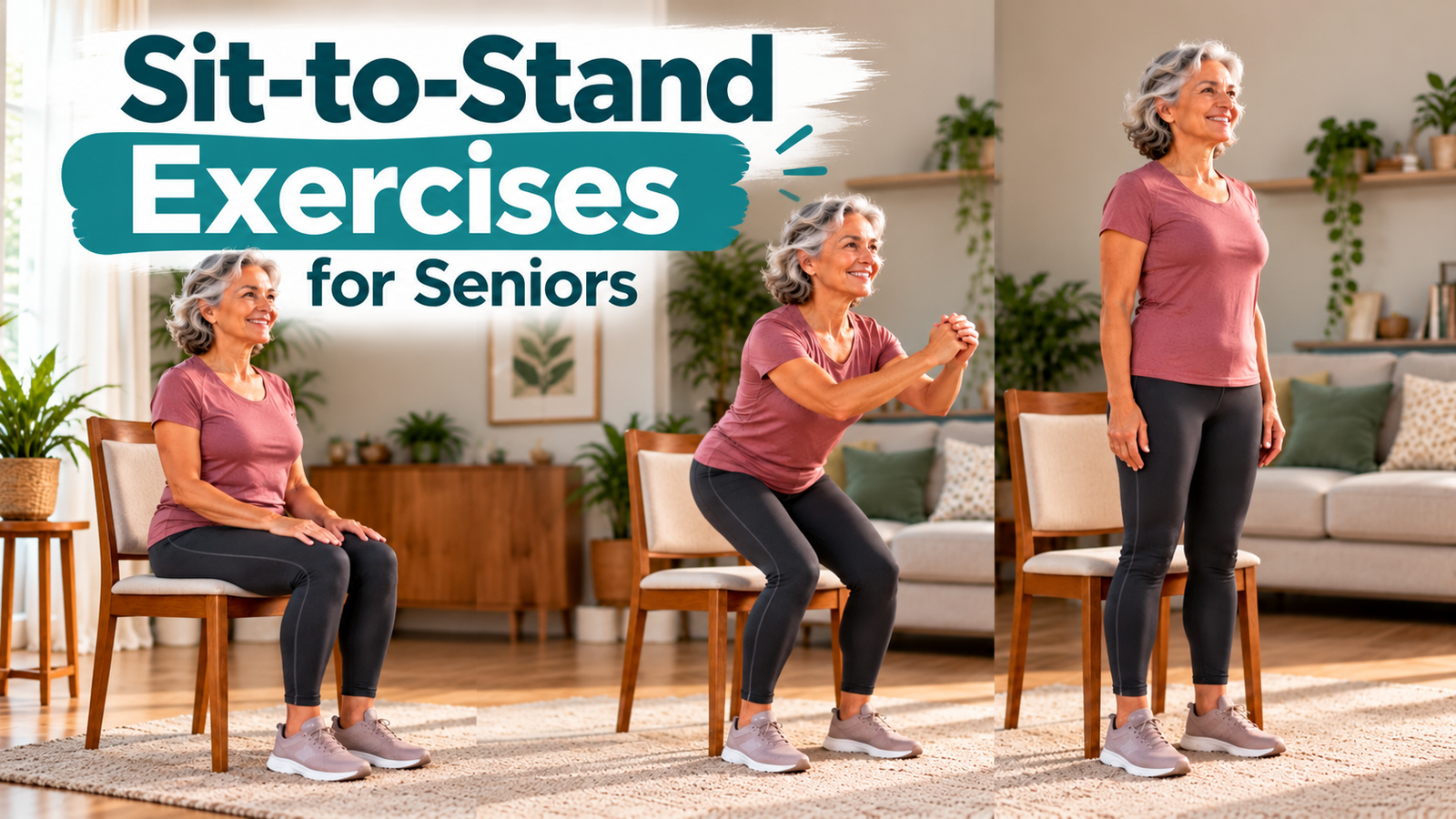
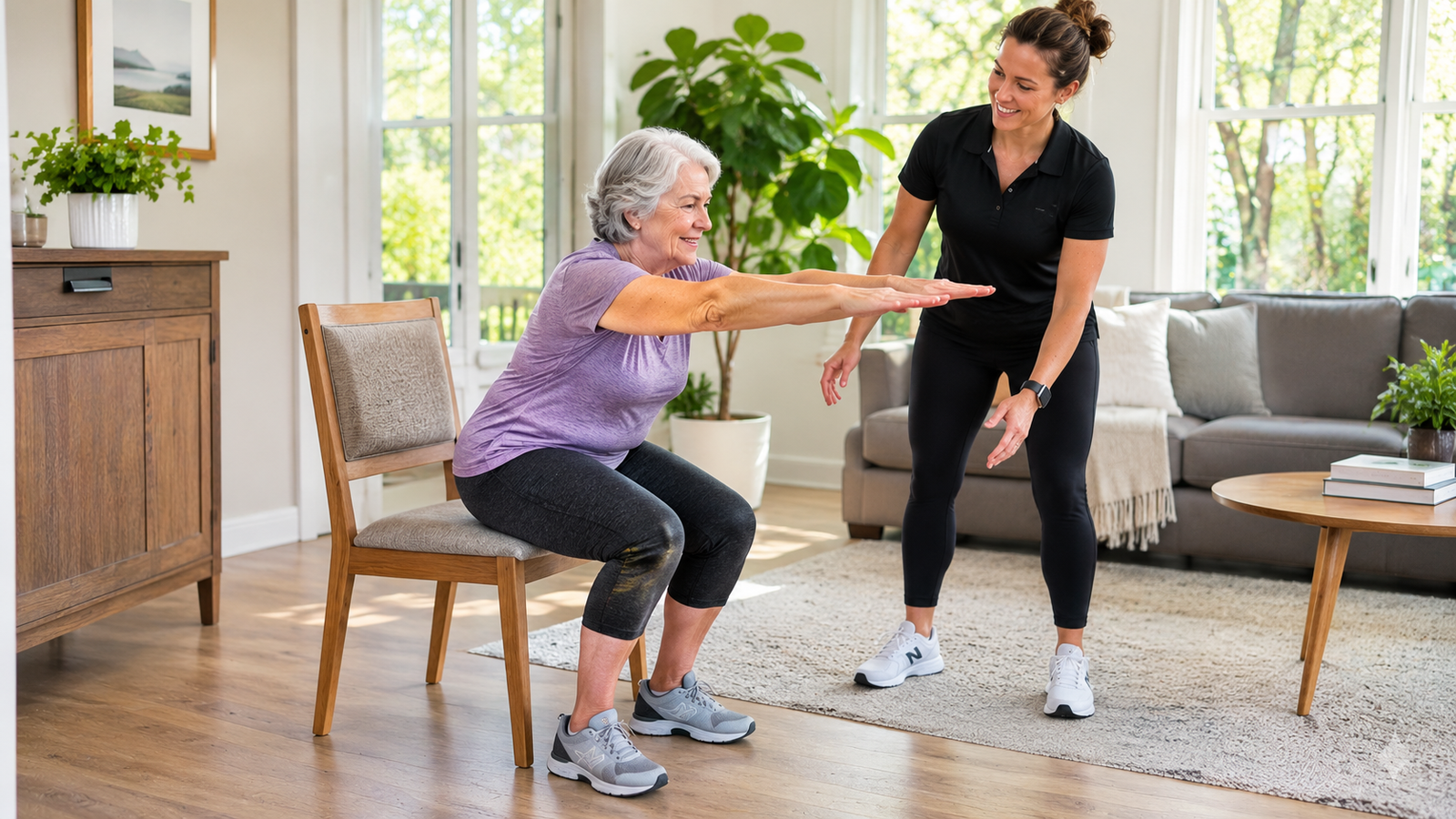
1. Sit-to-Stand
Stand up from a sturdy chair and sit back down slowly. This builds the leg strength needed for standing and sitting. You can learn more in our sit-to-stand exercise guide.
2. Supported Side Steps
Step sideways near a counter to practise controlled movement and weight shifting.
3. Heel-to-Toe Walk (Near a Wall)
Walk with one foot directly in front of the other to challenge stability while walking. Keep a wall or counter within reach.
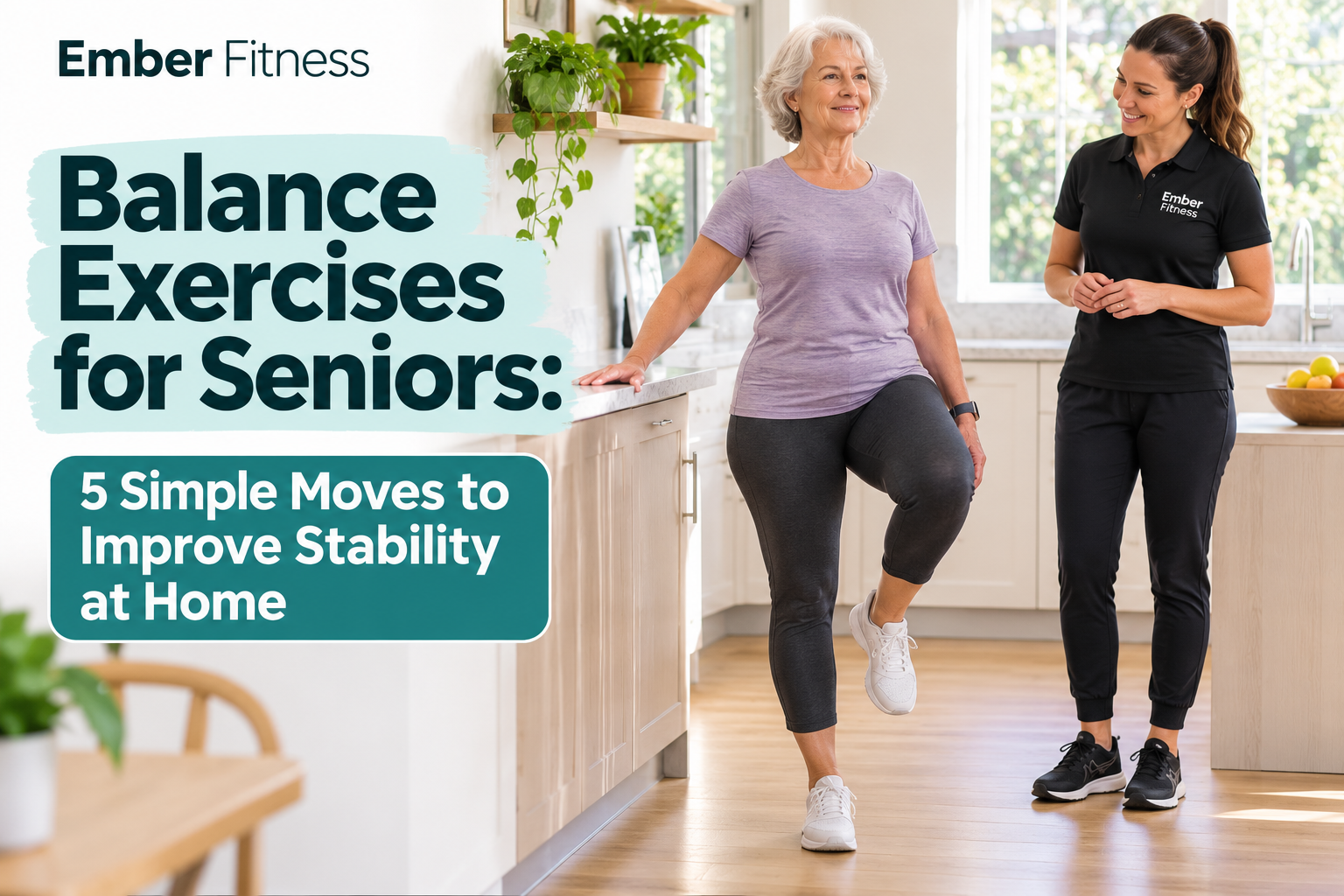
4. Supported Single-Leg Stand
Holding a counter, lift one foot slightly off the floor to build balance and ankle strength.
5. Calf Raises (Holding a Chair)
Rise onto your toes and lower slowly to strengthen the lower legs that help you stay steady.
Important: Practise near a sturdy surface and stop if you feel dizzy or have pain. Exercises should be adjusted to your fitness level and medical history. New or worsening balance problems should be assessed by a healthcare professional.
| Exercise | Main benefit |
|---|---|
| Sit-to-stand | Leg strength for standing and sitting |
| Supported side steps | Controlled movement and weight shifting |
| Heel-to-toe walk | Walking balance and coordination |
| Supported single-leg stand | Balance and ankle stability |
| Calf raises | Lower-leg strength for steadiness |
The number of repetitions and how long you hold each position should match your ability and any guidance from your healthcare team.
How to Practise Balance Exercises Safely at Home
Start with the supported version of each of these balance exercises for seniors and keep a sturdy counter, wall, or chair within reach. Wear supportive, non-slip shoes, and clear the floor of loose rugs and clutter before you begin.
Many seniors begin with two or three short sessions a week and add one exercise at a time. Progress gradually: if an exercise feels easy, increase the hold time slowly, and if it feels unsteady, return to the supported version. Consistency matters more than intensity.
Stop and speak with a healthcare professional if you feel dizzy or lightheaded, have new joint pain, or notice repeated near-falls.
Signs You May Need Extra Support
If you find yourself holding onto furniture when you walk, avoiding stairs, or feeling unsteady when you turn, it may be a good time to ask for professional guidance. These changes are common, and a personalized plan of balance exercises for seniors can help you work on them safely.
Why Personalized Training Can Help
Every person’s balance is different. A trainer who works with seniors can check your form, adjust balance exercises for seniors to your ability, and progress them safely as you get stronger.
Ember Fitness provides in-home personal training for seniors and older adults who want to improve their strength, mobility, and confidence. Our fall prevention and strength building program focuses on the lower-body strength and balance that support everyday movement.
Our trainers work with clients in their homes, condo gyms, and retirement residences across Cambridge, Kitchener, Waterloo, Guelph, Mississauga, Brampton, Toronto, Oakville, Milton, Vaughan, Markham, and surrounding GTA areas.
Final Thoughts
Balance can be trained. Balance exercises for seniors work best with regular, appropriate practice and professional guidance where needed, seniors can work toward steadier movement and greater independence.
The goal is not only to avoid falls. It is to keep building the strength and confidence needed for daily life.