Why Is the Sit-to-Stand Exercise Important for Seniors?
Getting up from a chair is something most people do several times a day. However, as we age, reduced leg strength, balance, and mobility can make this simple movement more challenging.
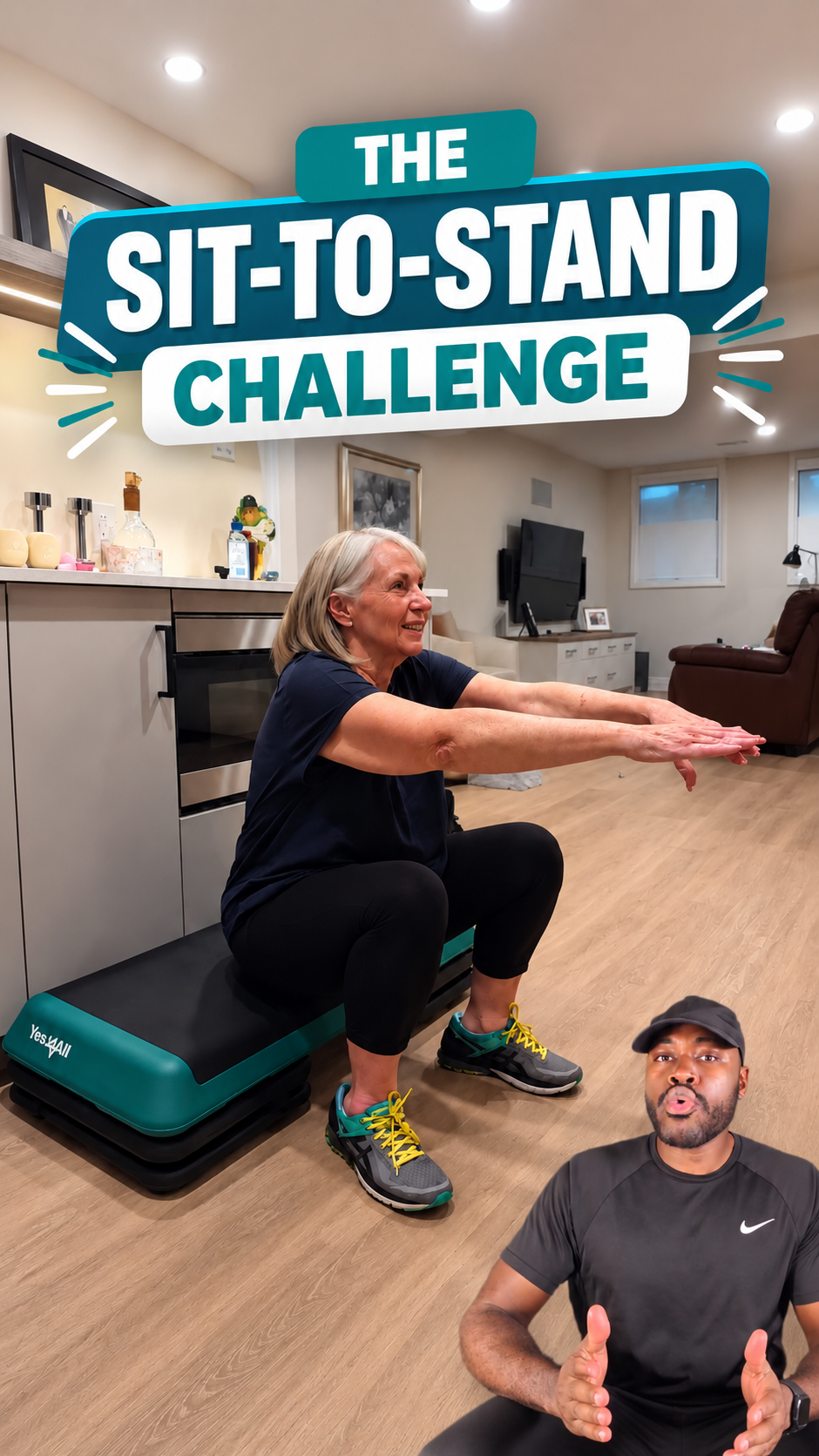
The sit-to-stand exercise for seniors, also known as a chair squat, helps practise this essential everyday movement while strengthening the muscles used to stand, walk, and climb stairs.
It’s a simple exercise that can be adapted to different abilities and performed at home with minimal equipment.
3 Benefits of Sit-to-Stand Exercises
1. Builds Leg Strength
Standing up from a chair works the quadriceps, glutes, and other muscles around the hips and legs. Maintaining these muscles can make everyday movements easier and help older adults remain physically active.
2. Supports Balance and Fall Prevention
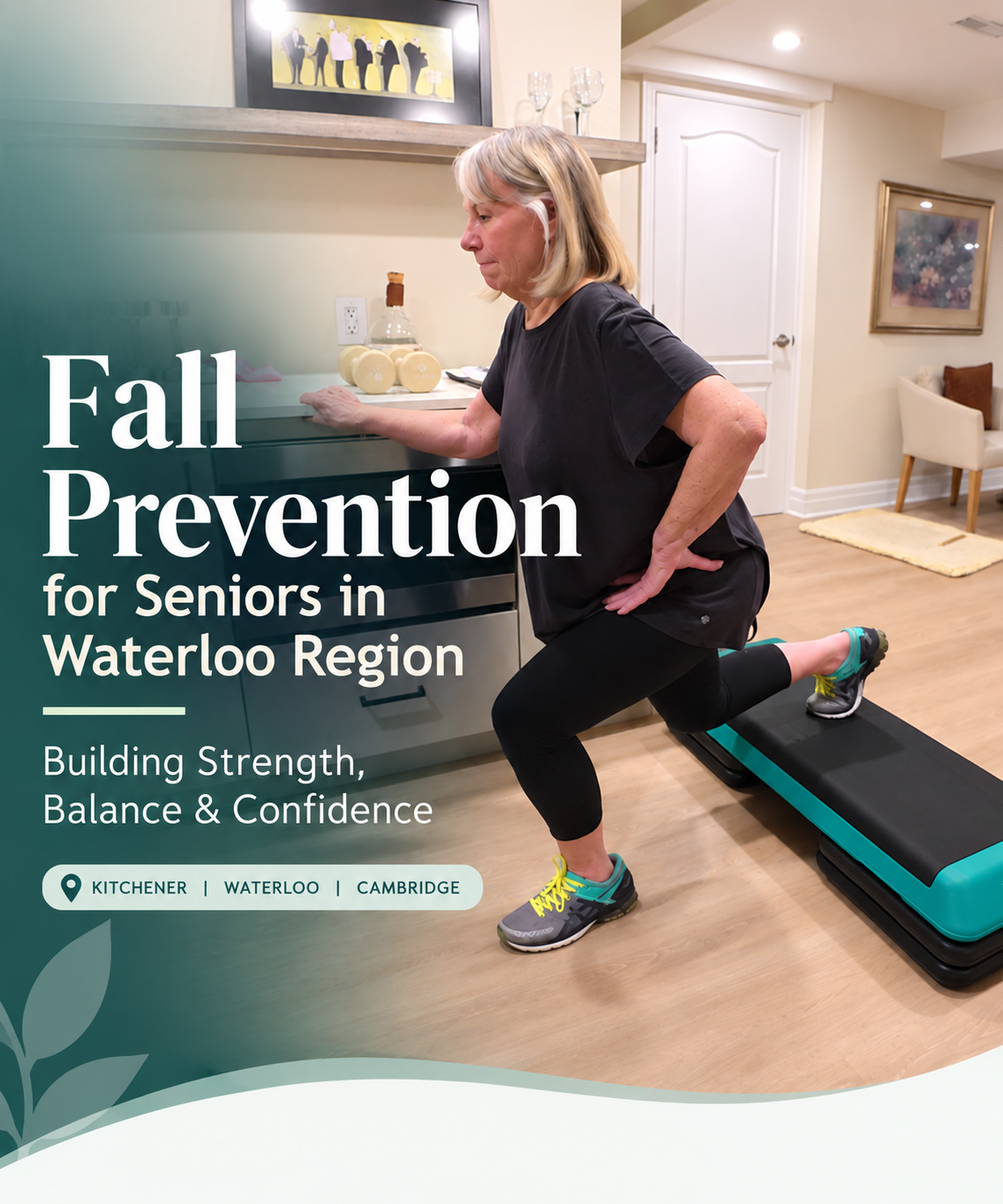
The sit-to-stand movement requires coordination as the body transitions from sitting to standing. Combined with appropriate balance training and other strengthening exercises, it can form part of a fall-prevention routine.
Although no single exercise can prevent every fall, improving strength and balance can help reduce fall risk.
3. Supports Everyday Independence
From getting out of a chair to standing up after using the toilet, leg strength plays an important role in daily life. Practising chair squats can help seniors work toward performing these movements with greater control and confidence.
How to Perform a Sit-to-Stand Exercise
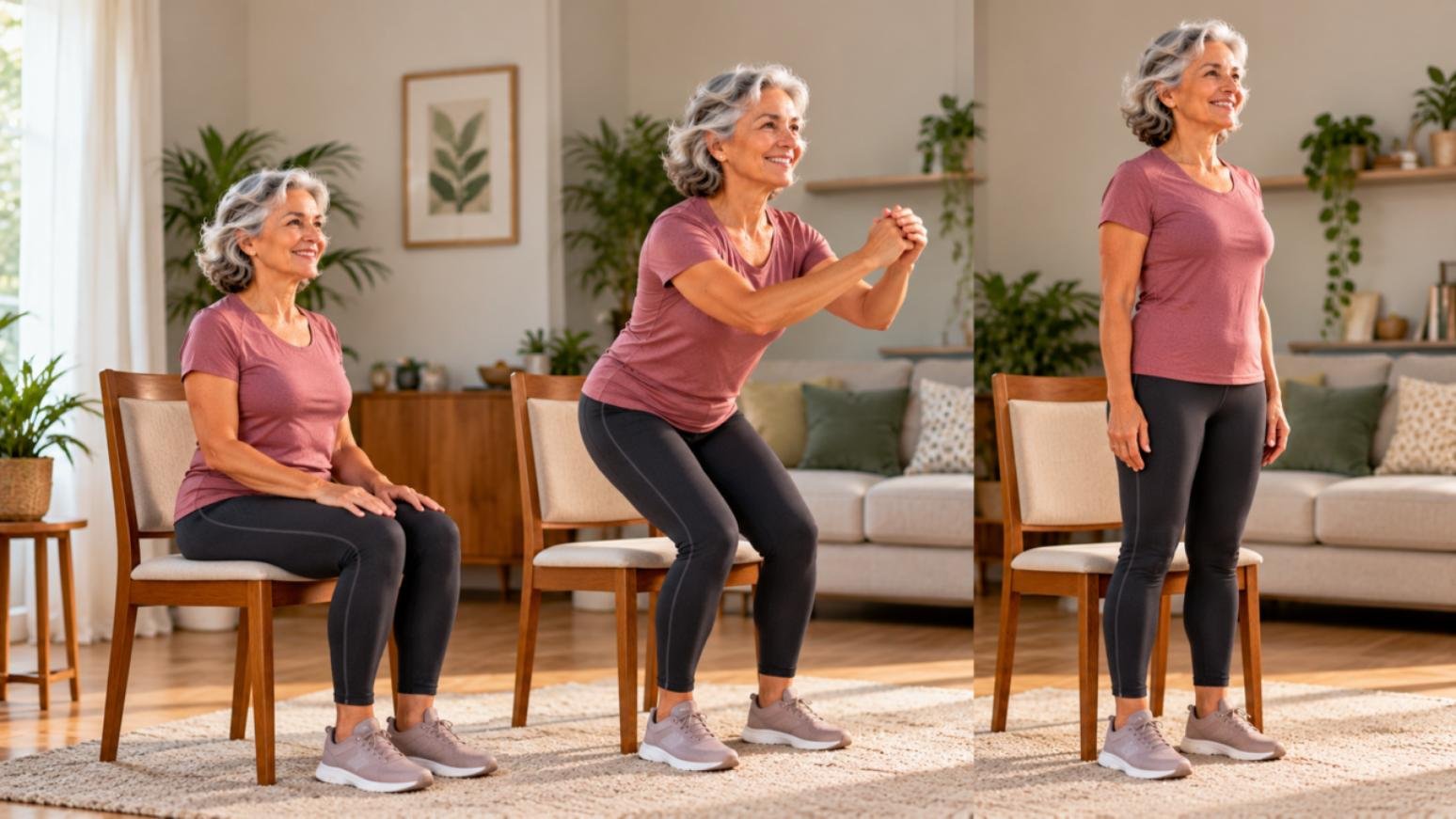
Start seated: Sit on a sturdy chair with your feet flat on the floor, approximately hip-width apart.
Lean forward: Bring your upper body slightly forward while keeping your back comfortable and controlled.
Stand up: Push through your feet and straighten your hips and knees.
Pause: Stand tall and steady before beginning the next repetition.
Sit down slowly: Bend your hips and knees and lower yourself gently onto the chair.
Beginner tip: Start with 5 repetitions and rest as needed. Use the armrests or your hands for assistance if necessary. As your strength improves, gradually increase repetitions or reduce assistance when appropriate.
Always use a stable chair on a non-slip surface. Seniors with significant balance difficulties, recurring falls, or pain should seek guidance from a qualified professional before beginning.
Sit-to-Stand vs. Chair Squats: What's the Difference?
These exercises are closely related, but the emphasis can vary.
Sit-to-stand: Focuses on moving from a seated position to standing and returning to the chair.
Chair squat: Often involves lowering the hips toward a chair and standing again, sometimes lightly touching the seat without fully sitting down.
Both exercises can help develop functional lower-body strength. The best variation depends on the individual’s strength, balance, comfort, and ability.
Make Strength Training Part of Your Routine
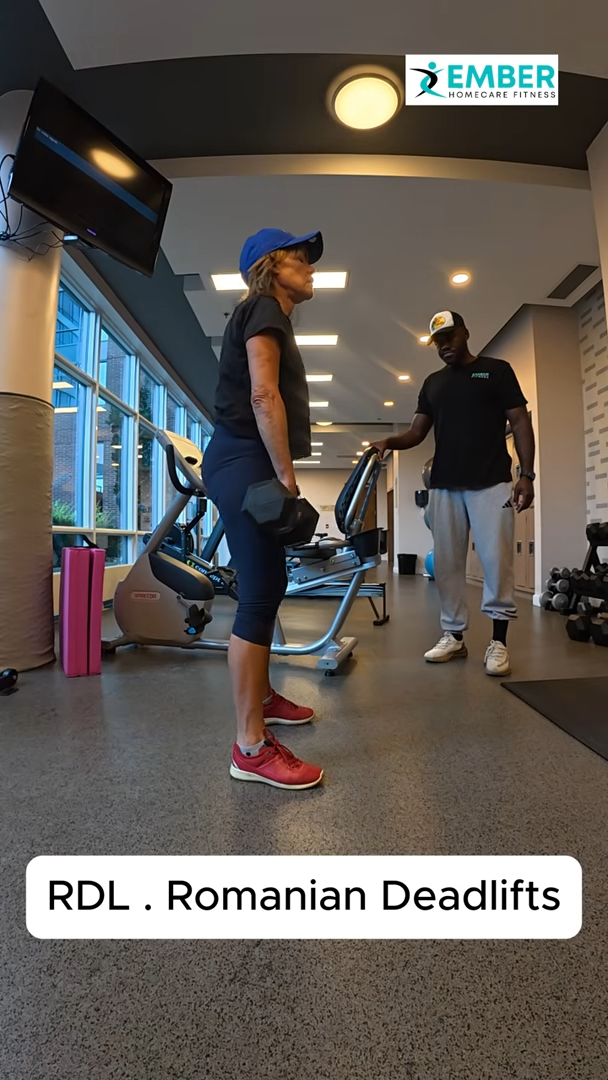
Sit-to-stand exercises work best when combined with a balanced routine that may include supported balance exercises, step-ups, upper-body strengthening, and walking.
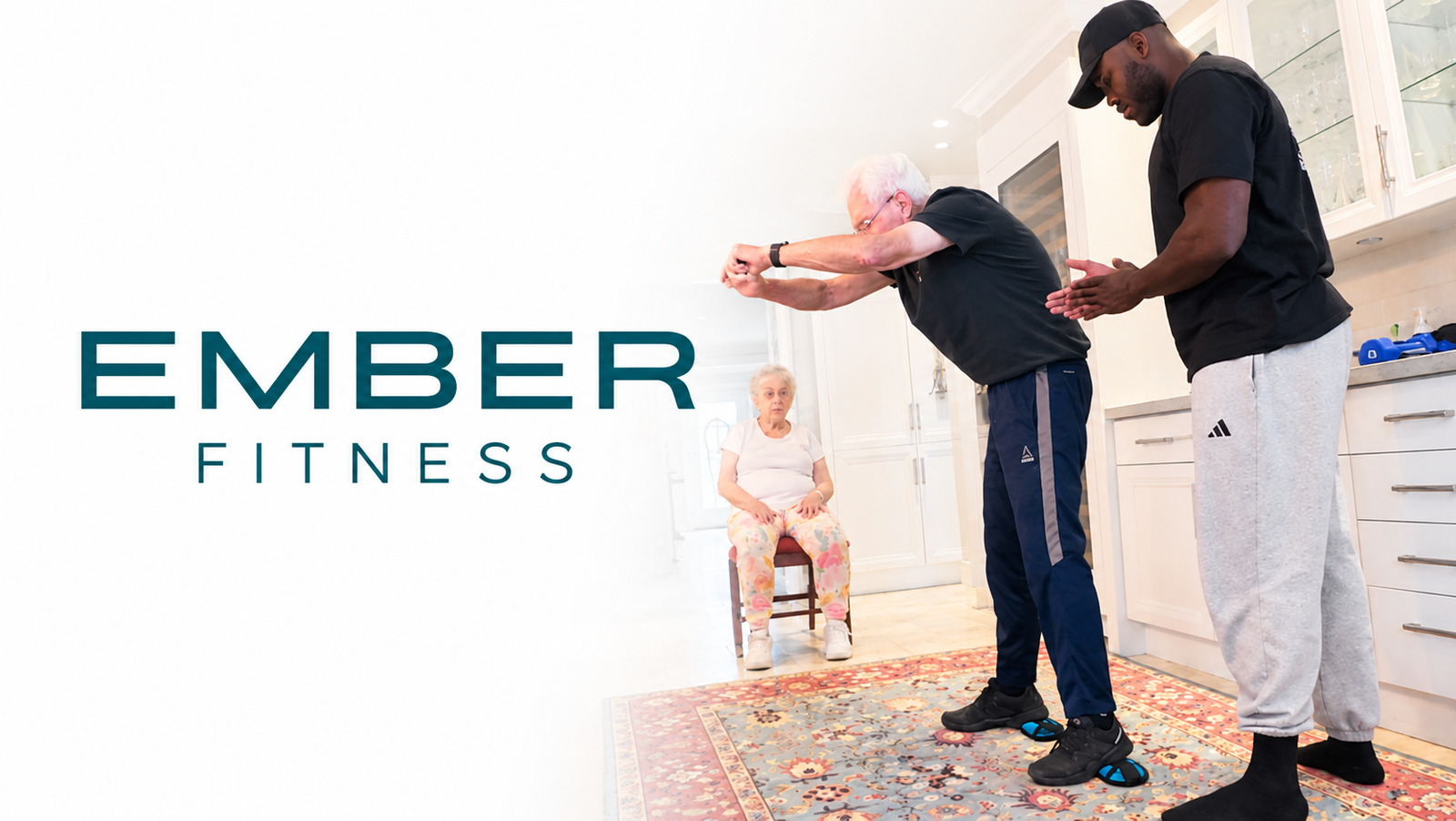
At Ember Fitness, we provide in-home personal training for seniors and older adults, helping clients work on strength, balance, mobility, and fall prevention in a familiar environment.
We serve communities across the GTA, including Toronto, Mississauga, Brampton, Etobicoke, North York, East York, Scarborough, Vaughan, Richmond Hill, Markham, Oakville, and Milton, as well as Cambridge, Kitchener, Waterloo, and Guelph.
Explore our in-home personal training services or contact Ember Fitness to book a free consultation.