Strength training for seniors at home is one of the most effective ways to stay independent, steady on your feet, and confident in everyday life. You do not need a gym membership or heavy equipment to begin.
Many older adults worry that lifting weights is risky or that it is too late to start. The truth is that muscles respond to training at any age, and a simple home routine can make daily tasks like carrying groceries or getting out of a chair noticeably easier.
Why Strength Training Matters After 60
After 60, adults can lose muscle mass each decade, which affects balance, walking speed, and bone health. Regular resistance work slows that loss and is a core part of fall prevention for seniors. Stronger legs and hips help you recover quickly if you stumble, and stronger arms make everyday tasks safer.
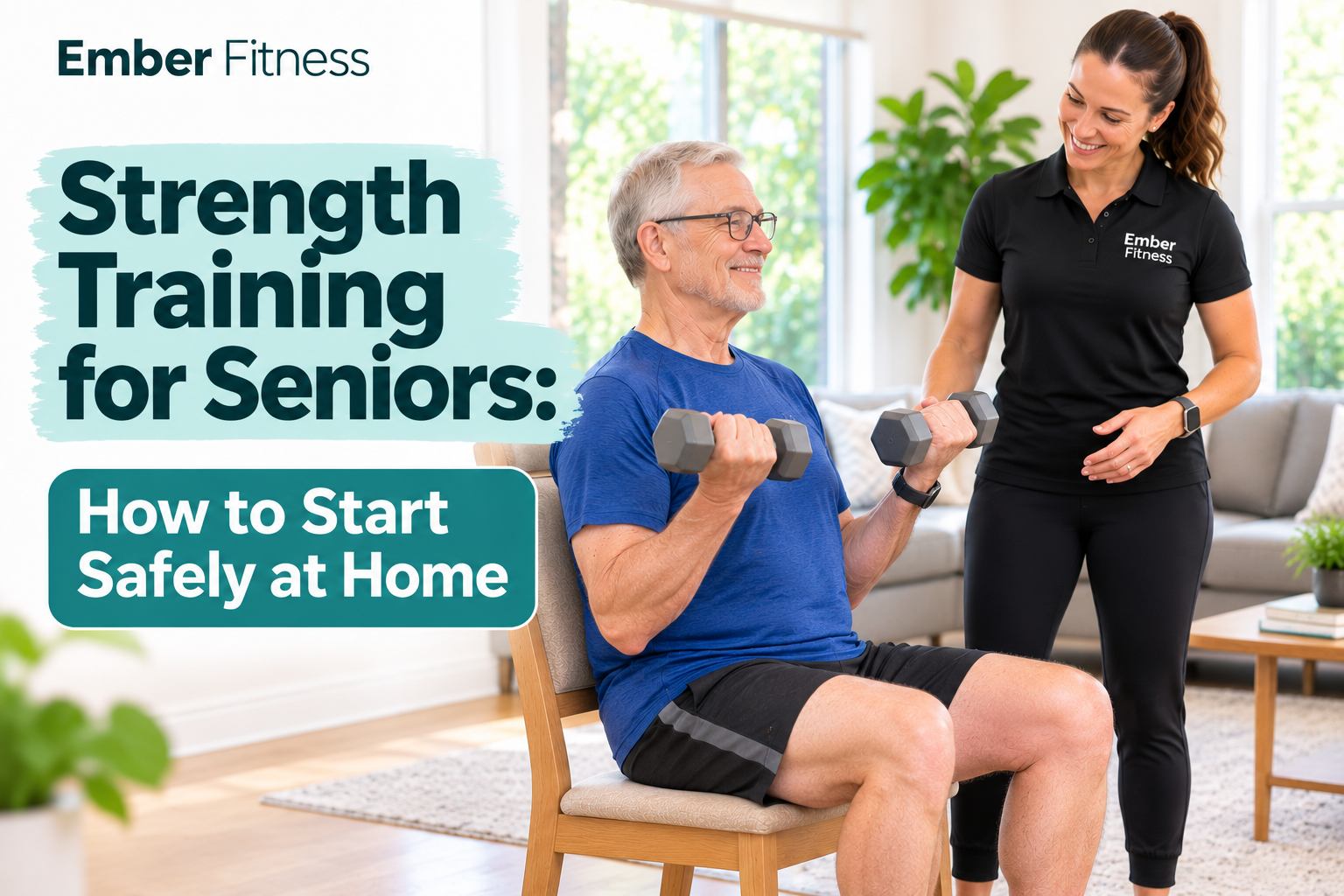
How to Do Strength Training at Home Safely
- Start with light weights, resistance bands, or just your body weight.
- Use a sturdy chair or countertop for support whenever you need it.
- Move slowly and breathe out as you lift or push.
- Stop if you feel sharp pain, dizziness, or chest discomfort and speak with your doctor.
5 Beginner Strength Exercises for Seniors
1. Sit-to-Stand
Sit near the front of a sturdy chair, lean slightly forward, and stand up using your legs. Lower back down slowly. Aim for 8 to 10 repetitions. This move builds the leg strength you use every day.
2. Wall Push-Ups
Stand an arm length from a wall, place your hands at shoulder height, and bend your elbows to lean in. Push back to start. It is a gentle way to build chest and arm strength.
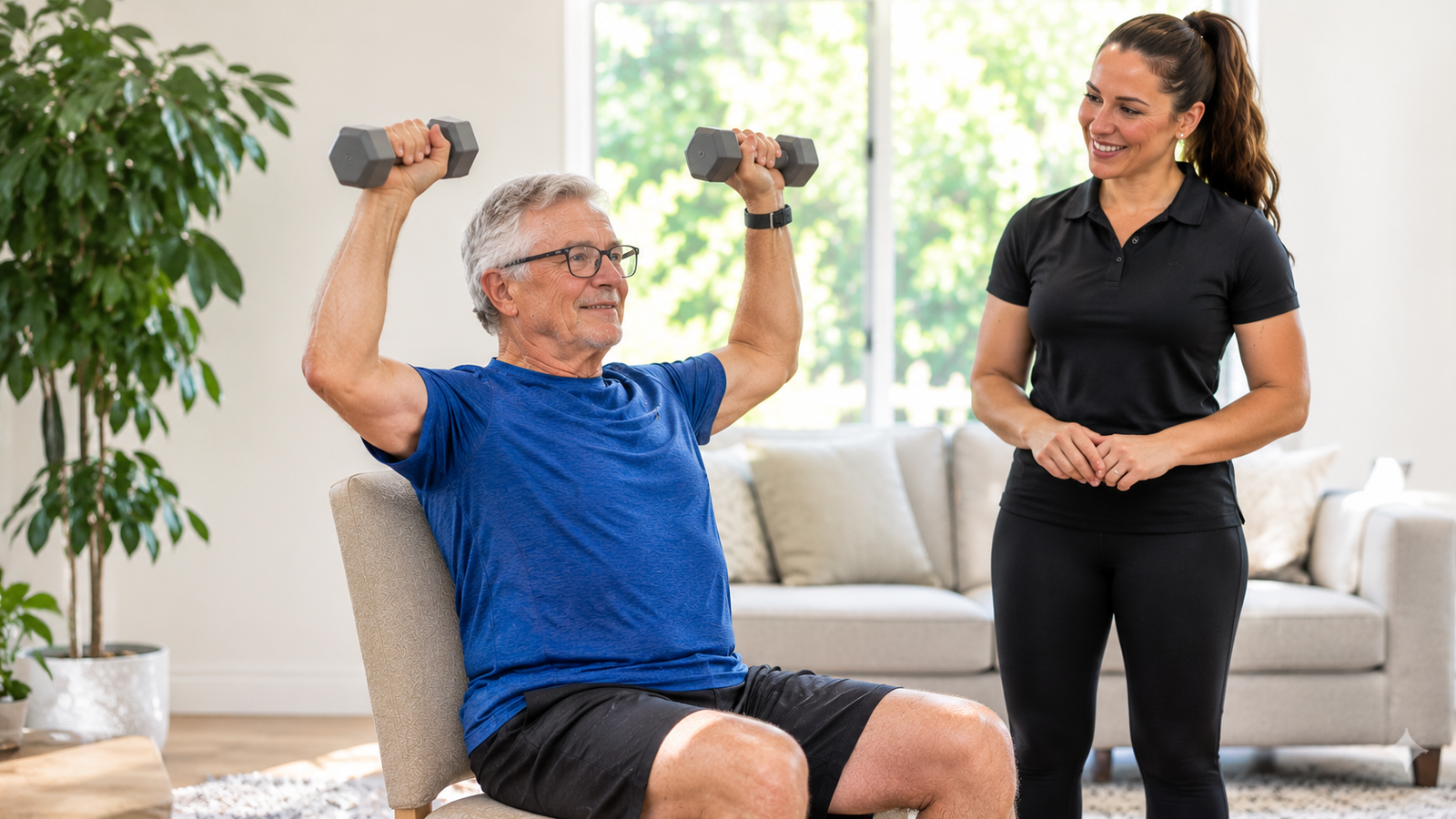
3. Seated Dumbbell Shoulder Press
Sit tall holding light dumbbells at shoulder height. Press them overhead and lower with control. Start with one to two pounds and increase slowly.
4. Standing Calf Raises
Hold a counter, rise onto your toes, pause, and lower slowly. This strengthens the lower legs and supports walking and balance.
5. Resistance Band Rows
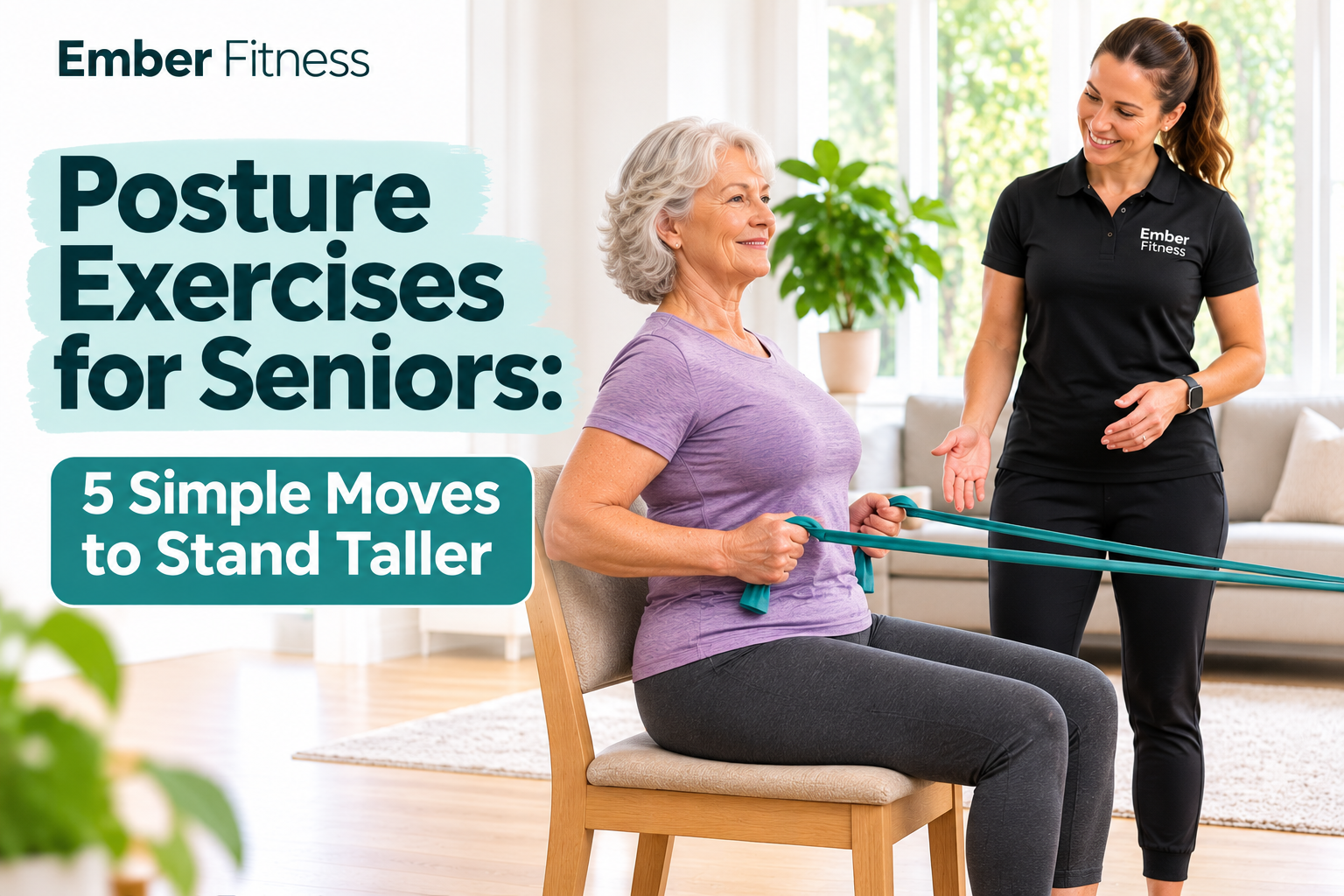
Sit with a band looped around your feet, pull the handles toward your ribs, and squeeze your shoulder blades together. It helps counter rounded posture.
Important: Check with your doctor before starting any new exercise program, especially if you have heart conditions, osteoporosis, or recent surgery.
| Exercise | Main benefit |
|---|---|
| Sit-to-Stand | Leg and hip strength |
| Wall Push-Ups | Upper body strength |
| Seated Dumbbell Shoulder Press | Shoulder strength |
| Standing Calf Raises | Ankle stability |
| Resistance Band Rows | Back and posture |
How Often Should You Train?
Most older adults do well with strength training for seniors at home two to three days per week on non-consecutive days. Start with one set of 8 to 10 repetitions per exercise and add a second set as it gets easier. Pair your sessions with daily walking and balance work for the best results.
Why Personalized Training Can Help
Every body is different, so strength training for seniors at home work best when they match your health history, your goals, and your home setup. A trainer who comes to you can adjust each move, watch your form, and progress things at the right pace. Our in-home personal training sessions and fall prevention and strength building program are built around exactly that.
Our trainers work with clients in their homes, condo gyms, and retirement residences across Cambridge, Kitchener, Waterloo, Guelph, Mississauga, Brampton, Toronto, Oakville, Milton, Vaughan, Markham, and surrounding GTA areas.
Ready to start? Book a free assessment and we will build a plan around strength training for seniors at home that fits you.
Final Thoughts
Strength training for seniors at home does not have to be complicated. Begin with a few simple moves, stay consistent, and build up gradually. Small improvements in strength add up to better balance, more energy, and greater independence.