Walking for seniors is simple, free, and one of the best things you can do for your heart, your mood, and your independence. A short daily walk can make a real difference to how you feel.
You do not need special gear or a long distance to get started. What matters most is building a routine that feels safe, comfortable, and easy to stick with, even when the weather turns cold.
Why Walking Matters After 60
Regular walking supports heart health, bone strength, blood sugar control, and sleep. It also keeps the legs strong and the hips mobile, which supports fall prevention for seniors. Walking with friends or family adds social connection, which is just as important for healthy aging.

How to Do a Daily Walking Routine Safely
- Wear supportive shoes with good grip, especially on cold or wet days.
- Start with 5 to 10 minutes and add a few minutes each week.
- Choose flat, well-lit paths and consider a walking partner.
- Bring a phone and water, and carry ID in case of an emergency.
5 Tips for Walking for Seniors
1. Start Small
Begin with a 10-minute walk at an easy pace. If you can chat comfortably, the pace is right. Build from there week by week.
2. Warm Up First
Take two minutes of slow marching in place and a few ankle circles before heading out. It prepares your muscles and joints.
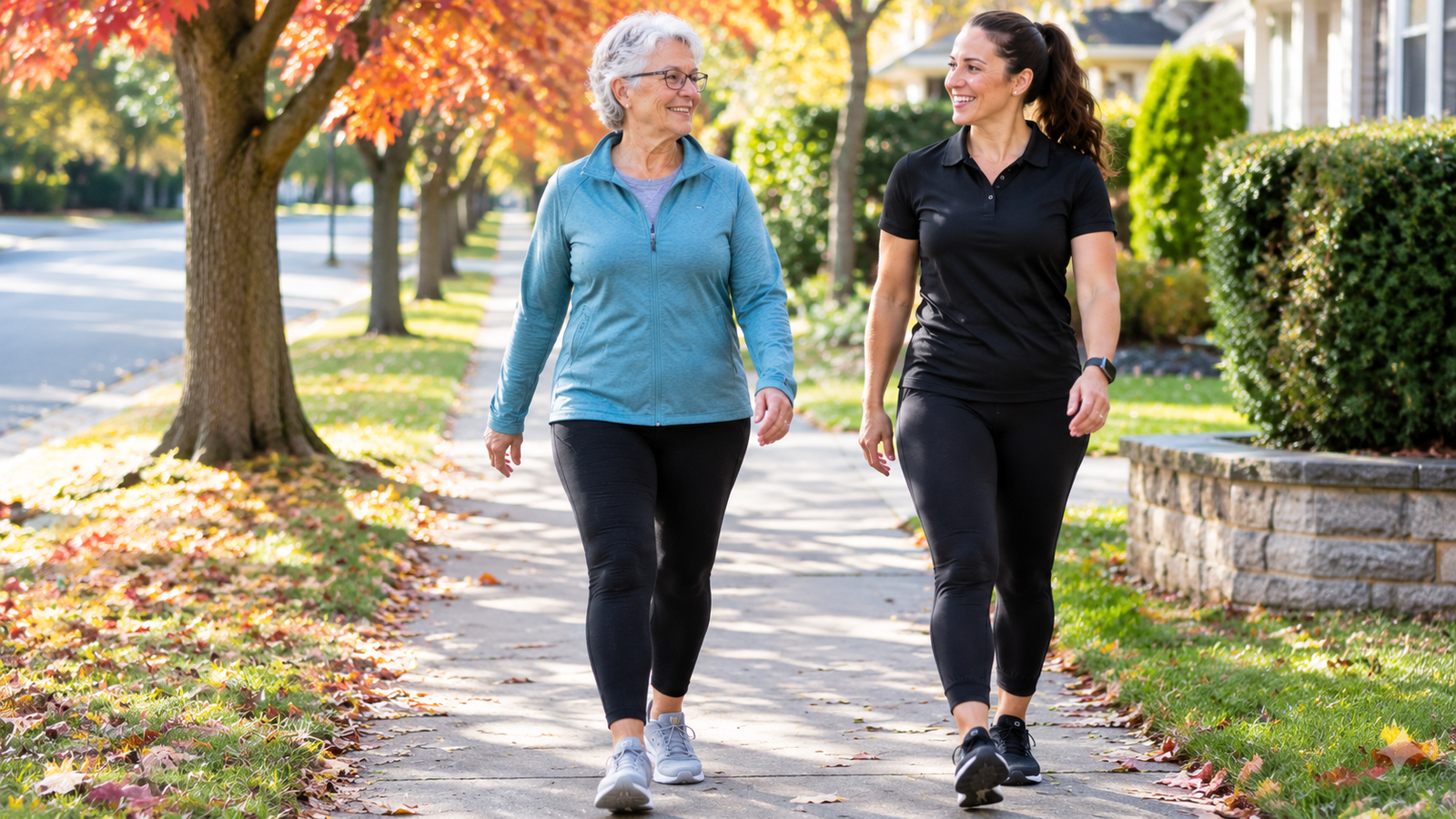
3. Use Good Posture
Keep your head up, shoulders relaxed, and eyes looking ahead. Swing your arms naturally and take comfortable steps.
4. Walk With a Friend
Invite a friend, neighbour, or trainer. Company makes it easier to stay consistent and adds safety.
5. Cool Down and Stretch
Finish with a slow two-minute walk and gentle calf and hamstring stretches. It helps reduce stiffness afterward.
Important: If you feel chest pain, dizziness, or unusual shortness of breath, stop and seek medical help. Check with your doctor before starting a new routine.
| Exercise | Main benefit |
|---|---|
| Start Small | Safe progress |
| Warm Up First | Injury prevention |
| Use Good Posture | Balance and efficiency |
| Walk With a Friend | Motivation and safety |
| Cool Down and Stretch | Recovery |
How Much Walking Is Enough?
Many health guidelines suggest about 150 minutes of moderate activity per week, which can be split into 10 to 30 minute walks. For walking for seniors, consistency beats intensity. Start where you are and add a little each week.
Why Personalized Training Can Help
Every body is different, so walking for seniors work best when they match your health history, your goals, and your home setup. A trainer who comes to you can adjust each move, watch your form, and progress things at the right pace. Our in-home personal training sessions and fall prevention and strength building program are built around exactly that.
Our trainers work with clients in their homes, condo gyms, and retirement residences across Cambridge, Kitchener, Waterloo, Guelph, Mississauga, Brampton, Toronto, Oakville, Milton, Vaughan, Markham, and surrounding GTA areas.
Ready to start? Book a free assessment and we will build a plan around walking for seniors that fits you.
Final Thoughts
Walking for seniors is a gentle, powerful habit. Start small, stay safe, and enjoy the benefits for your heart, mood, and mobility. Add some strength and balance work, and you will feel steadier with every step.