The right exercises for seniors with osteoporosis can help strengthen bones, improve balance, and lower the risk of fractures. Safe movement matters just as much as regular movement.
Many people with osteoporosis avoid activity out of fear, but bones respond to gentle load. The key is choosing moves that build strength while avoiding deep bending and twisting of the spine.
Why Exercise Matters for Bone Health
Weight-bearing and resistance exercise signal your bones to stay strong, while balance work reduces the chance of a fall. Together they form a key part of fall prevention for seniors. Strong muscles also act like a natural brace around fragile bones.
How to Do Osteoporosis Exercises Safely
- Avoid forward bending at the waist and sharp twisting of the spine.
- Skip high-impact moves such as jumping.
- Keep your posture tall with shoulders back.
- Use a wall or chair for support when balancing.
5 Safe Exercises for Seniors With Osteoporosis
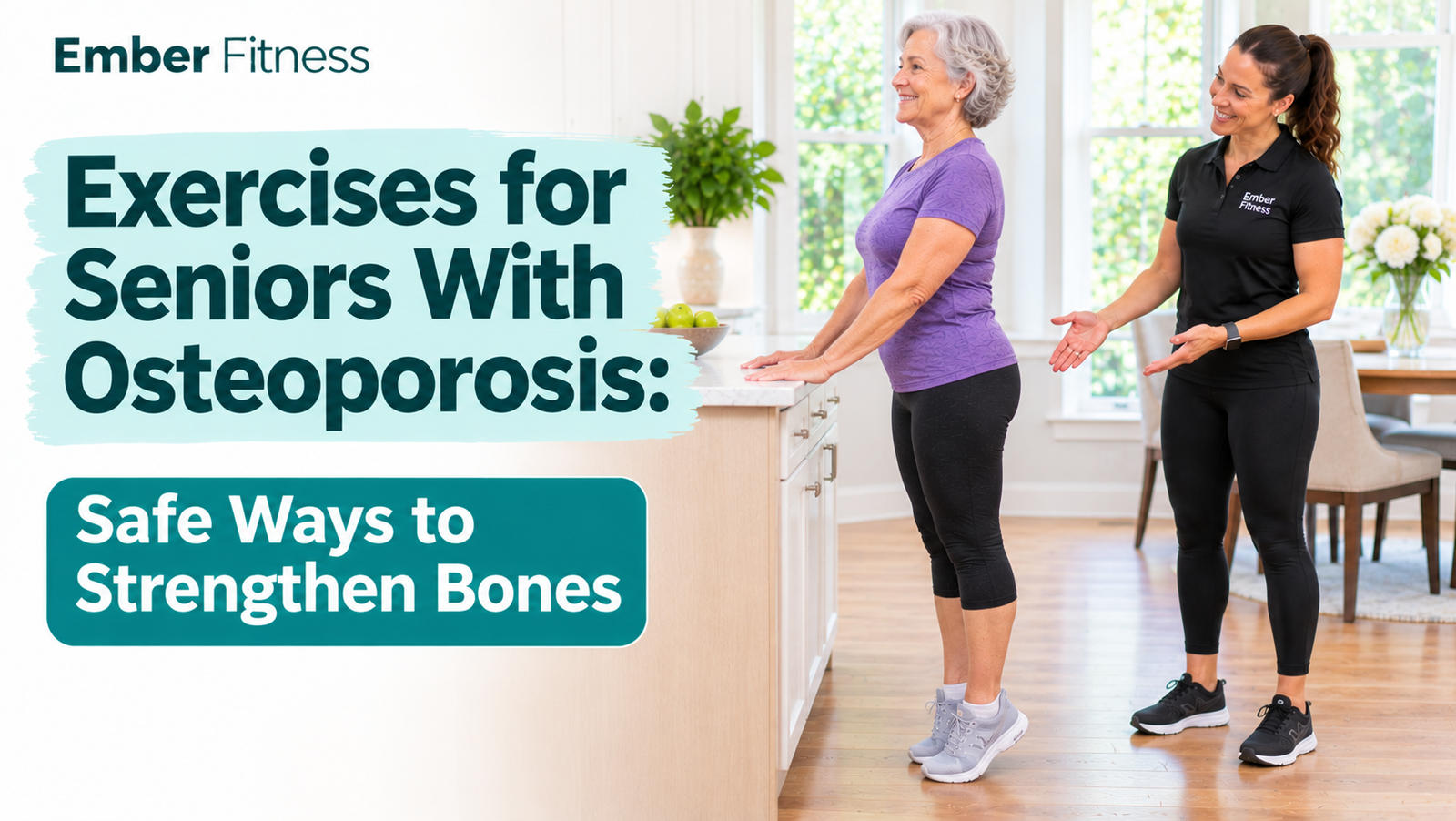
1. Standing Calf Raises
Hold a counter and rise onto your toes, then lower slowly. It loads the lower legs and ankles.
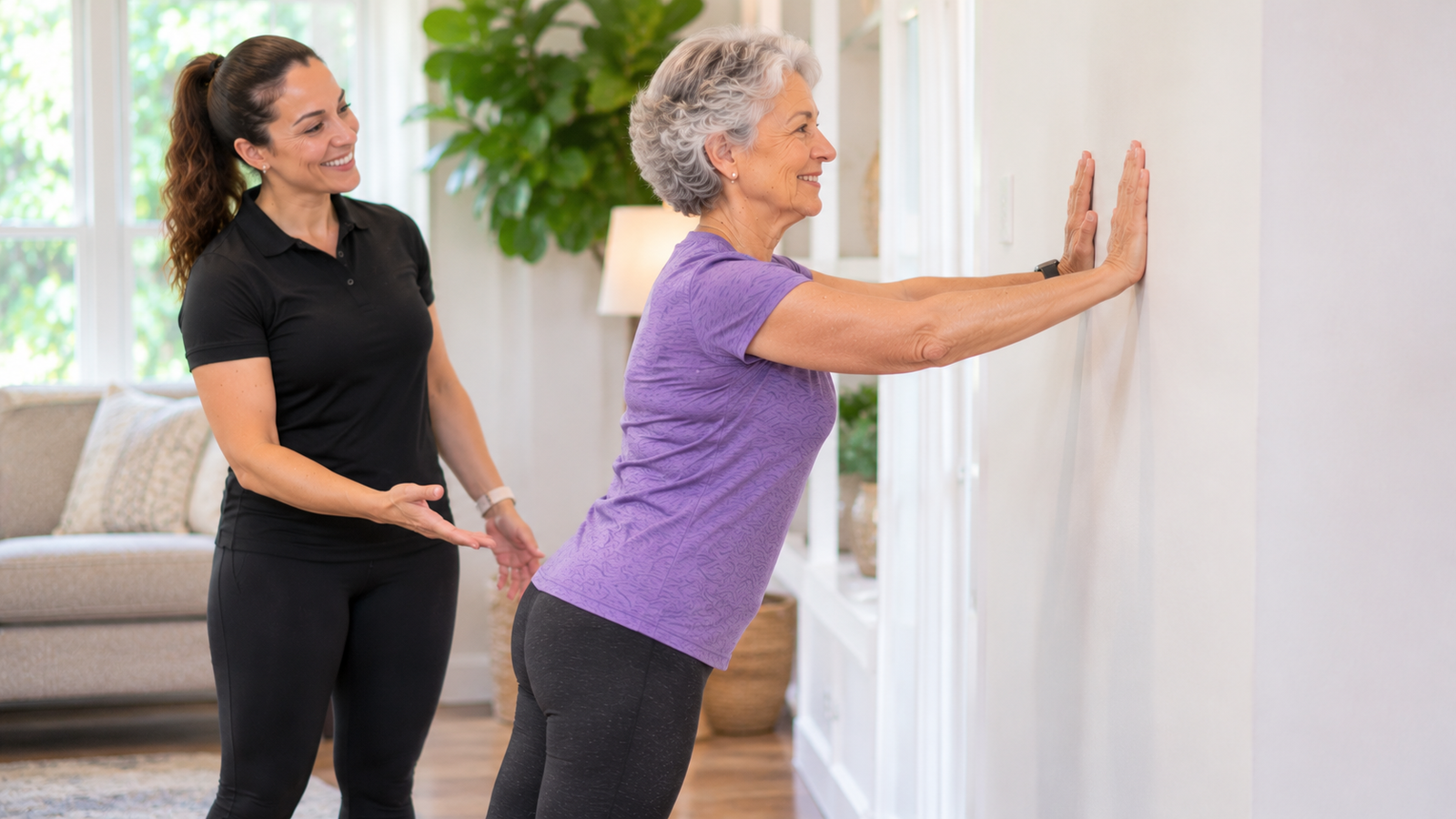
2. Wall Push-Ups
Lean into a wall and push back with straight posture. It strengthens the arms and chest.
3. Sit-to-Stand
Rise from a chair and sit slowly. It loads the hips and legs safely.
4. Heel-to-Toe Standing
Stand tall near a counter with one foot in front of the other and hold for 10 seconds.
5. Gentle Marching in Place
March slowly while holding a counter. It adds light weight-bearing for the hips.
Important: Always check with your doctor or physiotherapist before starting, especially if you have had a fracture or a low bone density result.
| Exercise | Main benefit |
|---|---|
| Standing Calf Raises | Lower leg bone loading |
| Wall Push-Ups | Upper body strength |
| Sit-to-Stand | Hip and leg strength |
| Heel-to-Toe Standing | Balance |
| Gentle Marching in Place | Weight-bearing activity |
How Often Should You Exercise?
Aim for weight-bearing activity most days and resistance training two to three days per week. When choosing exercises for seniors with osteoporosis, start with fewer repetitions and add gradually as you feel steady.
Why Personalized Training Can Help
Every body is different, so exercises for seniors with osteoporosis work best when they match your health history, your goals, and your home setup. A trainer who comes to you can adjust each move, watch your form, and progress things at the right pace. Our in-home personal training sessions and fall prevention and strength building program are built around exactly that.
Our trainers work with clients in their homes, condo gyms, and retirement residences across Cambridge, Kitchener, Waterloo, Guelph, Mississauga, Brampton, Toronto, Oakville, Milton, Vaughan, Markham, and surrounding GTA areas.
Ready to start? Book an assessment and we will build a plan around exercises for seniors with osteoporosis that fits you.
Final Thoughts
Exercises for seniors with osteoporosis can protect your bones and your confidence when they are chosen carefully. Move gently, stay tall, and consider guidance from a trainer who understands bone health.