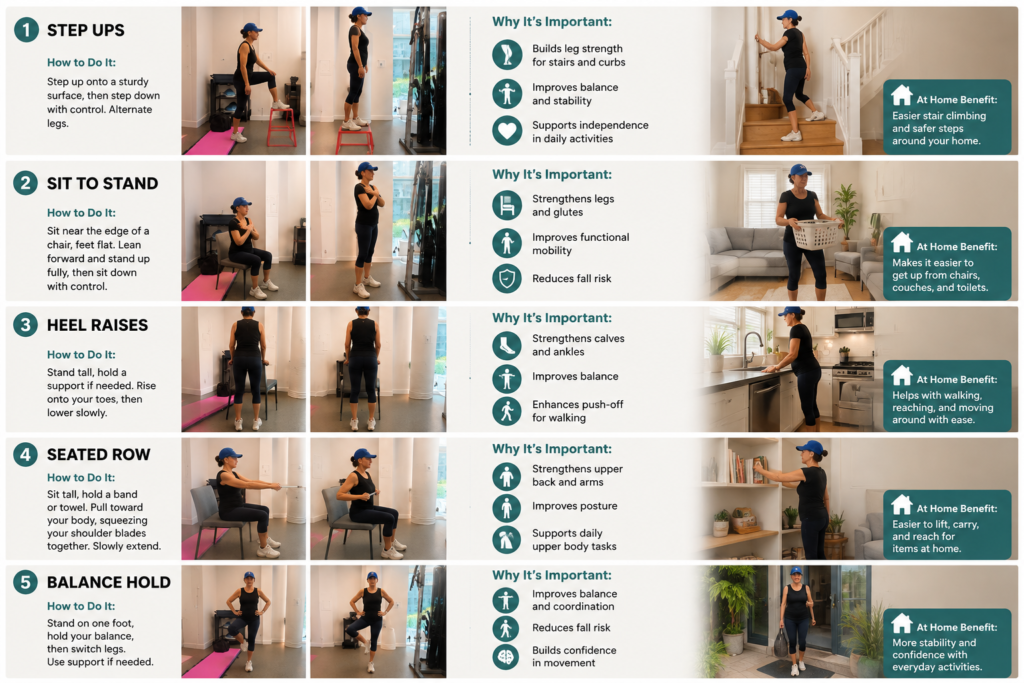
lifting tasks for seniors
Picking up a grocery bag, lifting a laundry basket, moving a small box, or reaching for something on a shelf may seem like simple tasks.
But as we age, these everyday lifting tasks can become more difficult and sometimes risky.
One major reason is the gradual loss of muscle strength, balance, mobility, and coordination.
The good news is that these abilities can be trained.
Why Lifting Becomes More Difficult
Lifting an object requires more than arm strength.
Your legs, hips, back, core, shoulders, and grip all work together to control the movement.
As seniors lose strength or mobility, they may compensate by:
- Bending excessively through the back
- Using poor lifting positions
- Holding their breath
- Twisting while carrying
- Lifting objects that are too heavy
- Losing balance while moving
This can make ordinary household tasks more challenging.
Strength Makes Everyday Tasks Easier
Functional strength for seniors focuses on the movements people actually use in daily life.
Exercises such as:
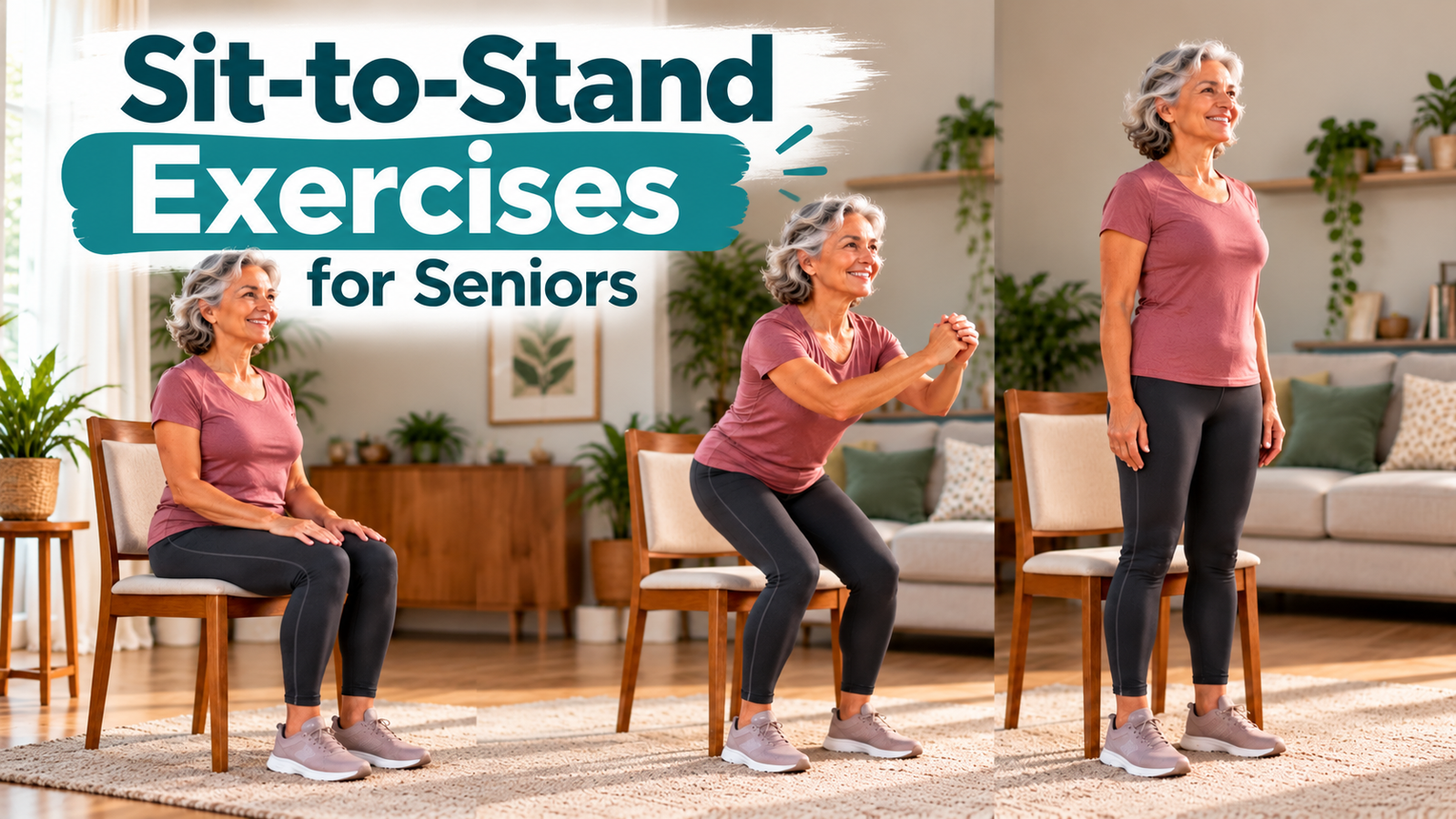
- Squats
- Hip hinges
- Rows
- Farmer carries
- Grip exercises
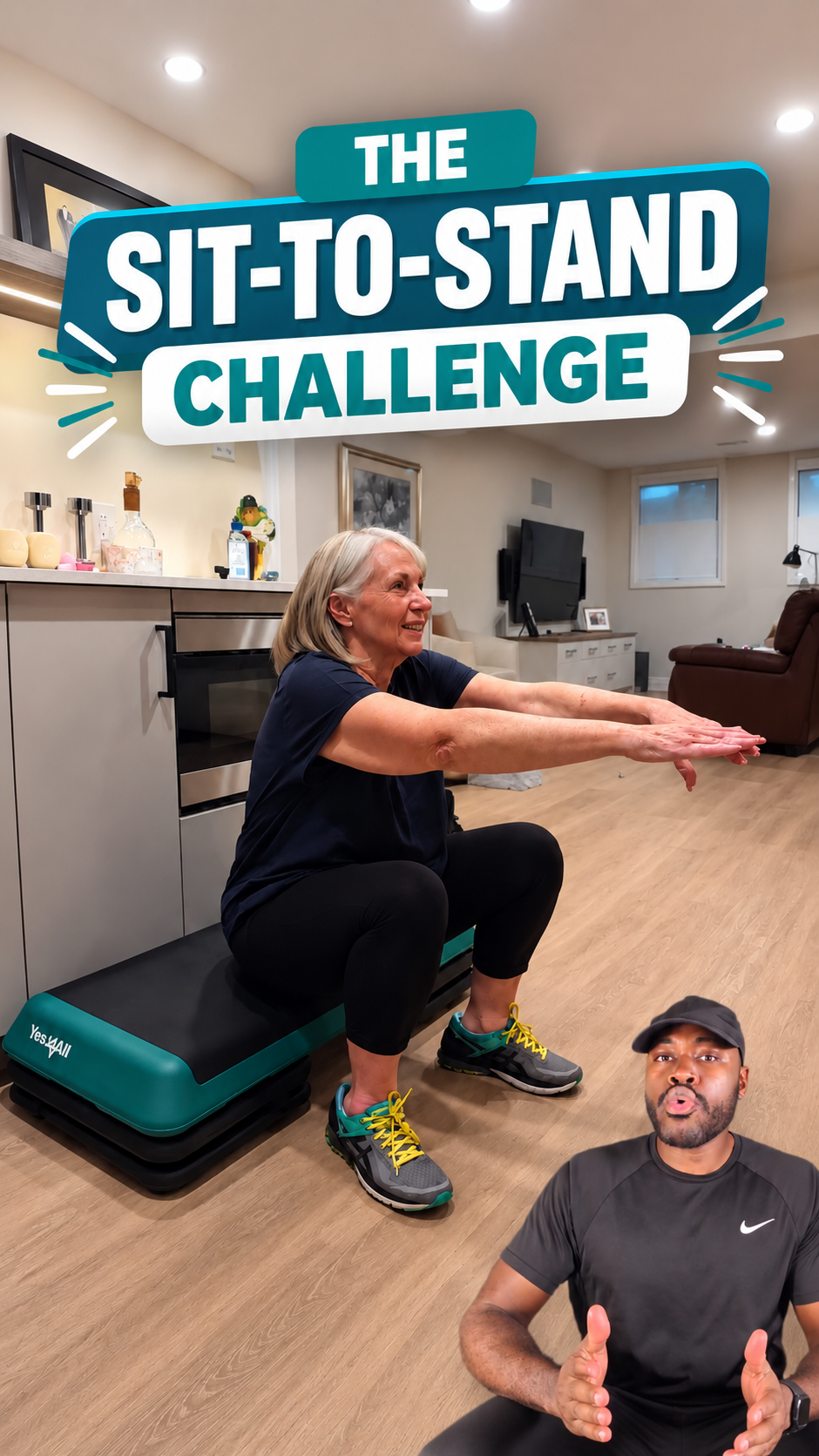
- Sit-to-stands
can help develop the muscles needed for lifting and carrying.
The goal isn’t to become a weightlifter.
It’s to make everyday activities feel more manageable.
Practice the Movement Before Adding Weight
One of the most important safe lifting techniques for seniors is learning proper movement before increasing the weight.
For example, when picking something up from the floor:
- Move close to the object.
- Keep your feet stable.
- Bend through your hips and knees.
- Keep the object close to your body.
- Stand using your legs and hips.
- Avoid twisting while lifting.
Start with a lightweight object and focus on controlled movement.
Sample Strength Routine
| Exercise | Sets | Reps |
|---|---|---|
| Chair Squats | 2 | 8 – 10 |
| Hip Hinge Practice | 2 | 8 |
| Resistance Band Rows | 2 | 10 |
| Farmer Carry | 2 | 20 – 30 sec |
| Heel Raises | 2 | 12 – 15 |
This type of strength training for older adults can help build the foundation needed for everyday lifting and carrying.
Don’t Forget Balance
Lifting isn’t only about strength.
You also need to remain stable while carrying an object.
Balance exercises can help seniors become more confident when moving around the home, carrying groceries, or navigating stairs.
This is particularly important because an unexpected shift in weight can challenge your balance.
When Should You Ask for Help?
If an object is too heavy, awkward, or difficult to control, asking for help is the safest choice.
Exercise should help you become stronger—not encourage you to take unnecessary risks.
If you have significant pain, dizziness, weakness, or a recent injury, speak with an appropriate healthcare professional before beginning a new exercise program.
Build Strength for Real Life
At Ember Fitness, we believe exercise should have a purpose beyond the workout.
Our programs focus on helping seniors develop the strength and mobility they need for everyday activities—from getting out of a chair to carrying groceries and moving safely around their homes.
We provide personalized in-home personal training for older adults across Mississauga, Brampton, Oakville, Burlington, Milton, Etobicoke, Toronto, North York, Vaughan, Richmond Hill, Markham, Cambridge, Kitchener, Waterloo, and Guelph.
Conclusion
Simple lifting tasks can become risky when strength, balance, mobility, and coordination decline.
But aging doesn’t mean you have to accept weakness as inevitable.
With consistent lifting safety for seniors, appropriate exercise, and progressive strength training, older adults can work toward making everyday movements safer and easier.
Don’t just train to lift weights, train to lift the things that matter in everyday life.