Topics
- 1. The Physiological Realities of Aging Past 50
- 2. Why Weight Training Wins: The Unmatched Benefits
- 3. Demolishing the Myths: Lifting Weights is For Everyone
- 4. The Core Components of a Safe Over-50 Home Routine
- 5. A Safe, Practical 5-Exercise Routine to Start at Home
- 6. The Synergy of Nutrition: Fueling the Over-50 Athlete
- 7. The Ember Fitness Advantage: Tailored In-Home Personal Training
- 8. Frequently Asked Questions (FAQ)
- Conclusion: Invest in Your Future Self
The New Milestone of Modern Aging
Crossing the threshold of 50 is a powerful milestone. In generations past, entering your fifties was often viewed as the beginning of a slow, inevitable physical wind-down. But as we navigate life in 2026, the paradigm of aging has completely transformed. Today, adults in Toronto, Oakville, Milton, and across the Greater Toronto Area are rewriting the rules of longevity. They aren’t looking to simply fade into the background; they are running businesses, traveling the world, picking up new hobbies, and demanding a high quality of life.
Yet, to maintain this vibrant lifestyle, our approach to physical health must evolve. While walking, cycling, and standard aerobic exercises are excellent for your cardiovascular health, they miss a critical component of the longevity puzzle. If you want to protect your independence, keep your joints pain-free, and feel as energized as you did two decades ago, there is one clear and scientifically proven answer: weight training.
At Ember Fitness, we see firsthand how customized resistance training transforms the lives of older adults. Whether you are in Mississauga, Brampton, or Barrie, bringing structured weight training into your routine, right in the comfort of your home, is the single best investment you can make for your future. This comprehensive guide breaks down exactly why weight training wins after 50, the science behind its success, and how you can safely get started today.
1. The Physiological Realities of Aging Past 50
To truly appreciate why weight training is so transformative, we have to look closely at the biological changes that occur inside our bodies as the decades pass. Aging is an honor, but it does present unique physiological shifts that we must proactively manage.
The Threat of Sarcopenia
Beginning around the age of 30, the human body enters a phase of gradual muscle loss known as sarcopenia. If left unchecked, the average adult loses between 3% and 5% of their muscle mass every decade. Once you hit 50, this process hits an inflection point and begins to accelerate.
Muscle tissue is highly metabolic; it controls how your body processes blood sugar, burns calories, and balances itself. When you lose muscle, your metabolism slows down, your joints lose their primary support systems, and everyday tasks—like carrying groceries up a flight of stairs or lifting luggage into an overhead compartment—become significantly harder. Sarcopenia isn’t just about feeling weaker; it directly diminishes your real-world freedom.
Osteopenia and the Risk of Fractures
It isn’t just our muscles that change; our skeletal system changes as well. Bone density naturally declines with age, particularly in women post-menopause, leading to osteopenia and eventually osteoporosis. When bones become porous and brittle, the structural integrity of the skeleton is compromised.
This change is what makes falls so devastating for older adults. A minor stumble that a 30-year-old would shake off can result in a life-altering hip or wrist fracture for someone over 50. According to data from health organizations like the McMaster University Optimal Aging Portal, proactive physical counter-measures are critical to slowing down and reversing this degradation of bone mass.
2. Why Weight Training Wins: The Unmatched Benefits
When it comes to building a resilient body after 50, generic lifestyle changes aren’t enough. Your workouts need to be targeted, progressive, and specific. Here is why lifting weights beats out every other form of exercise for adults entering their golden years.
A. It Rebuilds and Preserves Precious Muscle Mass
The beauty of the human body is that muscle tissue remains adaptable throughout your entire life. You can build new muscle fiber at age 55, 75, or even 95. Weight training forces your muscles to adapt to external resistance, triggering muscle protein synthesis. By preserving and rebuilding this tissue, you directly fight back against sarcopenia, ensuring you maintain the raw physical horsepower required to live life entirely on your own terms.
B. It Triggers Bone Remodeling (Wolff’s Law)
Bones are living tissues that respond directly to stress. A foundational principle in medicine, known as Wolff’s Law, states that bone grows and remodels in response to the forces placed upon it. When you lift weights, your muscles pull against your bones. This mechanical stress signals your body to deposit calcium and other essential minerals into the bone matrix, effectively dense-ifying your skeleton and building a natural armor against fractures.
C. It Softens and Protects Aching Joints
A common misconception is that lifting weights damages your joints. In reality, the exact opposite is true. Conditions like osteoarthritis are characterized by the wearing down of protective cartilage. When the muscles surrounding a joint (like your quadriceps around your knee) are weak, the joint absorbs 100% of the daily impact from walking or climbing stairs.
By strengthening the surrounding musculature, you create a built-in shock absorption system. This takes the structural pressure off the joint capsule, reduces chronic inflammation, improves lubrication, and significantly decreases day-to-day arthritic pain.
D. It Optimizes Metabolic and Hormonal Health
As muscle mass drops, the body’s ability to clear glucose from the bloodstream decreases, increasing the risk of Type 2 Diabetes. Muscle tissue serves as a massive sink for blood sugar. More muscle means better insulin sensitivity and improved metabolic efficiency. Furthermore, weight training stimulates the release of growth hormone and testosterone (in both men and women), which are vital for cellular repair, cognitive health, and maintaining a lean body composition.
3. Demolishing the Myths: Lifting Weights is For Everyone
Despite the overwhelming clinical evidence supporting resistance training, many seniors over 50 are hesitant to get started. Let’s dispel the old-school myths that keep adults trapped in cycles of physical decline.
Myth 1: “Lifting weights is dangerous for older adults.”
The Reality: Not lifting weights is what is truly dangerous. Being frail, unsteady on your feet, and lacking the strength to save yourself from a fall is a far higher health risk than performing a controlled, supervised deadlift or chest press. When done with proper form and appropriate loading, weight training is incredibly safe and therapeutic.
Myth 2: “I’ll get too bulky or stiff.”
The Reality: Building a bodybuilder-like physique requires hyper-specific genetics, hours of daily lifting, and massive caloric surpluses. For adults over 50, weight training results in dense, toned, and functional muscle. When combined with regular stretching, lifting weights actually increases your active range of motion, making you feel lighter and more flexible.
Myth 3: “Cardio is all I need to stay healthy.”
The Reality: Cardio keeps your heart and lungs healthy, but it does almost nothing to prevent muscle loss or bone decay. In fact, excessive chronic cardio without resistance training can sometimes accelerate the loss of lean muscle mass. A truly well-rounded routine must prioritize strength.
4. The Core Components of a Safe Over-50 Home Routine
If you want to experience the benefits of weight training without setting foot in a crowded public gym, building an optimized home routine is the perfect solution. A safe, high-yield program relies on foundational movements that reflect real life.
       [ Foundational Multi-Joint Exercises ]
                        │
       ┌────────────────┼────────────────┐
       ▼                ▼                ▼
[ Lower Body ]   [ Upper Body ]    [ Core Control ]
  Squat / Hinge    Push / Pull      Anti-Rotation
The Concept of Progressive Overload
To get stronger, you must gradually increase the demand placed on your body over time. This doesn’t mean jumping from a 5-pound dumbbell to a 50-pound dumbbell overnight. Progressive overload can mean adding one more repetition to your set, slowing down the movement to increase time-under-tension, or improving your posture and depth. Small, incremental progressions keep the body adapting without overloading your recovery capabilities.
Multi-Joint Compound Movements vs. Isolation Exercises
Instead of focusing on small isolation movements like bicep curls, your home workouts should focus on compound movements. These are exercises that recruit multiple joints and large muscle groups simultaneously. Examples include squats, lunges, rows, and push-ups. Because these movements mimic everyday life, they deliver a massive “bang for your buck” and directly improve your balance, coordination, and athletic performance.
5. A Safe, Practical 5-Exercise Routine to Start at Home
Here is a sample framework of safe, accessible resistance exercises that you can perform in your living room using minimal equipment, such as dumbbells, resistance bands, or your own body weight.
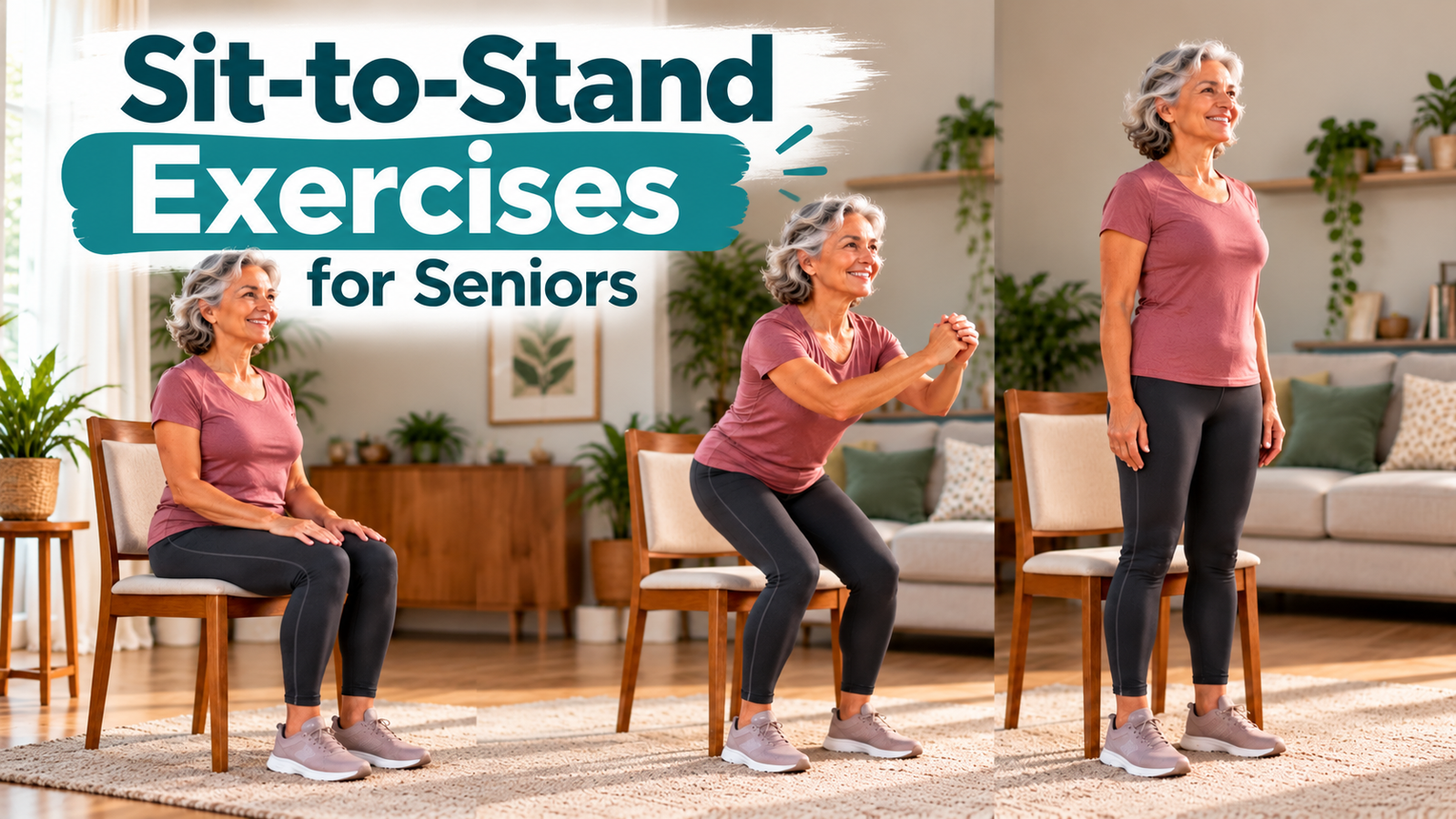
1. The Chair Squat (Lower Body Foundation)
Primary Muscles: Quadriceps, Glutes, Hamstrings.
Why it Wins: This exercise replicates the exact mechanics required to get out of an armchair, a car seat, or up from a low toilet.
Execution: Stand tall with your feet shoulder-width apart in front of a sturdy chair. Keep your chest up and your core engaged. Slowly lower your hips backward and down, as if you are going to sit. Lightly tap your glutes to the chair seat without relaxing your weight completely, then drive firmly through your heels to return to a full standing position.
Repetitions: Aim for 2 to 3 sets of 10–12 controlled reps.
2. The Wall or Countertop Push-Up (Upper Body Push)
Primary Muscles: Chest, Shoulders, Triceps, Core.
Why it Wins: It builds upper body pushing power and core stability without forcing you onto the floor, which can be difficult if you have knee or lower-back issues.
Execution: Place your hands flat against a sturdy wall or kitchen counter, slightly wider than shoulder-width apart. Step your feet back so your body is at a slight angle, resting on the balls of your feet. Keeping your body in a perfectly straight line from head to heel, slowly bend your elbows to lower your chest toward the surface. Pause for a second, then press yourself back to the starting position.
Repetitions: 3 sets of 8–10 smooth repetitions.
3. The Doorframe or Banded Row (Upper Body Pull)
Primary Muscles: Latissimus Dorsi, Rhomboids, Trapezius, Rear Shoulders.
Why it Wins: It counteracts the “slouched forward” posture caused by modern life, pulling the shoulders back and opening up the chest cavity for better breathing mechanics.
Execution: Secure a high-quality resistance band around a stable door anchor at chest height. Hold the handles with your arms extended and step back until you feel light tension. Standing with soft knees, pull the handles toward your lower ribs, drawing your elbows backward and squeezing your shoulder blades tightly together. Slowly return to the starting position.
Repetitions: 3 sets of 12 repetitions.
4. The Glute Bridge (Posterior Chain & Lower Back Protection)
Primary Muscles: Gluteus Maximus, Hamstrings, Core.
Why it Wins: Strong glutes act as an anchor for your pelvis, taking stress off the lower back and stabilizing the hips during walking.
Execution: Lie flat on your back on a comfortable exercise mat with your knees bent and feet flat on the floor, hip-width apart. Rest your arms down by your sides. Squeeze your buttocks firmly and drive through your heels to lift your hips toward the ceiling until your body forms a straight line from your shoulders to your knees. Avoid arching your lower back at the top. Hold for two seconds, then slowly lower down.
Repetitions: 2 sets of 10 repetitions.
5. The Supported Farmer’s Walk (Core and Grip Strength)
Primary Muscles: Forearms/Grip, Shoulders, Core, Stabilizer Muscles.
Why it Wins: Grip strength is one of the strongest clinical biomarkers for longevity in older adults. This exercise builds grip while challenging your posture and dynamic balance.
Execution: Pick up a pair of light-to-moderate dumbbells (or two filled water bottles) and hold them naturally down at your sides. Stand perfectly tall, pulling your shoulders down and back. Walk slowly and deliberately in a straight line across your living room, keeping your core tight and avoiding any side-to-side swaying.
Repetitions: Walk for 30–60 seconds, rest, and repeat 3 times.
6. The Synergy of Nutrition: Fueling the Over-50 Athlete
Lifting weights provides the stimulus for your body to change, but your nutrition provides the actual building blocks. As we age, our bodies develop a condition known as anabolic resistance, meaning we require more protein to stimulate the same amount of muscle growth as a younger person.
Optimizing Your Protein Intake
To see the benefits of your weight training program, ensure you are consuming adequate high-quality protein throughout the day. Focus on lean poultry, wild-caught fish, eggs, Greek yogurt, tofu, and legumes. Spreading your protein across your meals ensures your muscles have a steady supply of amino acids for repair. For official and detailed guidelines on designing a balanced plate as a Canadian adult, check out the resources provided on the Health Canada Healthy Eating Strategy (External Link).
Micronutrients and Joint Support
In addition to macronutrients, paying attention to specific vitamins can accelerate your progress:
Vitamin D & Calcium: Crucial for managing bone mineral density alongside your lifting.
Omega-3 Fatty Acids: Found in fish oil or flaxseeds, these act as natural anti-inflammatories to soothe arthritic joint pain.
Hydration: Muscles are made mostly of water. Proper hydration keeps your joint cartilage lubricated and prevents muscle cramping during your exercises.
7. The Ember Fitness Advantage: Tailored In-Home Personal Training
Embarking on a weight training journey after 50 can feel intimidating if you are managing past injuries, chronic pain, or long-term health issues. You shouldn’t have to guess whether your form is correct or worry about getting hurt. That is where we come in.
At Ember Fitness, we don’t believe in generic, cookie-cutter workouts. Our team specializes exclusively in the physiology of aging. We understand the specific nuances of managing arthritis, navigating balance changes, and preparing for or recovering from major joint procedures. Through our mobile training model, we eliminate all the traditional friction points of fitness:
No Crowded Gyms: We bring the entire gym experience straight to your doorstep, keeping you in a safe, familiar environment.
Comprehensive Screening: Before we pick up a single weight, we complete an in-depth assessment of your gait, posture, balance, and joint mobility.
Hands-on Coaching: Our trainers provide uninterrupted, one-on-one attention during every second of your session, giving you immediate feedback to maximize safety and efficacy.
We are proud to connect older adults across Ontario with high-end health solutions. Whether you need a dedicated Personal Trainer in Oakville, a structured plan with a Personal Trainer in Milton, or are looking for specialized care via a Personal Trainer in Toronto for Seniors, Ember Fitness is your ultimate partner in health.
To explore our full list of comprehensive mobile services, check out our In-Home Personal Training for Seniors page.
Learn how we build tailored stability and confidence with our Fall Prevention and Strength Building Program.
Ready to build a resilient future? Take the first step and Book In-Home Training to schedule your initial consultation.
Frequently Asked Questions (FAQ)
❓ Is it ever too late to start lifting weights?
❓ How many days a week should someone over 50 weight train?
❓ Should I use free weights, resistance bands, or machines?
❓ What should I do if an exercise causes joint pain?
❓ How does weight training help prevent falls?
Conclusion: Invest in Your Future Self
Weight training after 50 is not a matter of vanity; it is an act of profound self-care and a commitment to your long-term autonomy. It is the definitive choice to maintain your freedom, protect your body against the vulnerabilities of aging, and live a life unhindered by physical limitations.
You don’t have to navigate this road alone. Whether you are living in Mississauga, Brampton, Toronto, or Oakville, the specialized team at Ember Fitness is here to guide you step-by-step through a safe, empowering, and result-driven strength journey. Let’s work together to build a strong, resilient foundation for the chapters ahead.