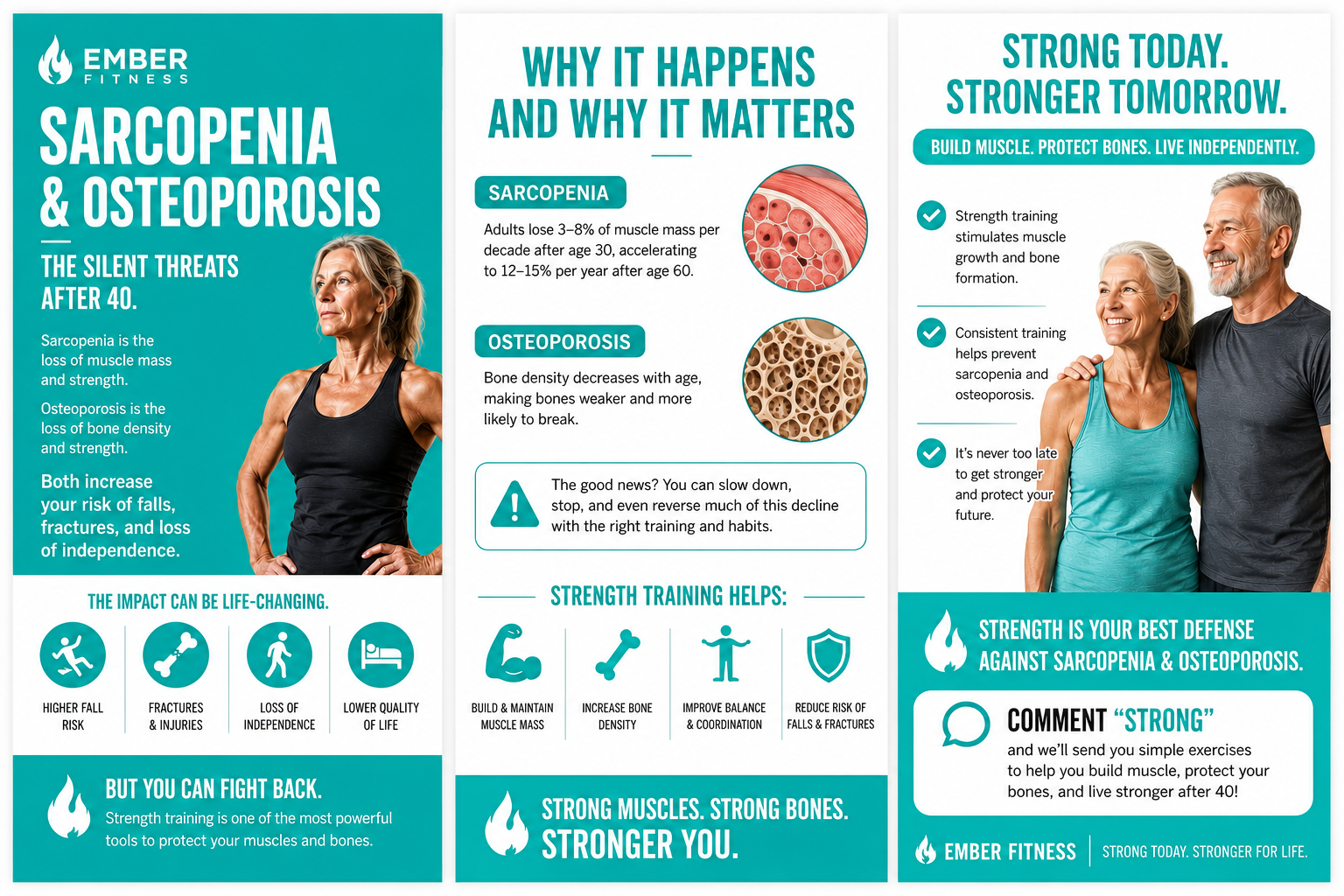
As we age, many changes happen inside the body that are not always immediately visible. Two of the most common conditions affecting older adults are sarcopenia and osteoporosis.
Sarcopenia refers to the gradual loss of muscle mass and strength that occurs with aging, while osteoporosis is the weakening of bones that increases fracture risk. Together, these conditions can affect mobility, balance, confidence, and independence.
The good news is that aging does not automatically mean becoming weak or fragile.
With proper exercise, nutrition, and lifestyle habits, seniors can improve strength, maintain mobility, and support healthy bones for years to come.
At Ember Fitness, we help older adults throughout Mississauga, Brampton, Oakville, Toronto, Etobicoke, North York, Milton, and Barrie improve strength, balance, and confidence through personalized in-home fitness programs designed specifically for seniors.
What Is Sarcopenia?
Sarcopenia is the age-related loss of muscle mass and strength.
Starting around age 30, adults naturally begin losing muscle tissue if they do not remain physically active. This muscle loss accelerates after age 50.
Over time, sarcopenia can make everyday activities more difficult, including:
- Walking
- Climbing stairs
- Carrying groceries
- Standing from chairs
- Maintaining balance
Research from the National Institute on Aging explains that age-related muscle loss can significantly affect mobility and independence in older adults.
Without intervention, muscle weakness can increase the risk of falls, injuries, and reduced quality of life.
What Is Osteoporosis?
Osteoporosis is a condition that causes bones to become weaker and more fragile.
Many people do not realize they have osteoporosis until they experience a fracture.
Common fracture areas include:
- Hips
- Wrists
- Spine
As bone density decreases, even small falls can result in serious injuries.
According to Osteoporosis Canada, strength training and weight-bearing exercise are among the most effective ways to support bone health and reduce fracture risk.
This is why exercise plays such an important role in preventing long-term mobility decline.
How Sarcopenia and Osteoporosis Are Connected
Muscles and bones work together.
When muscle strength decreases, balance and movement become less stable. Reduced activity levels then contribute to further bone density loss.
This creates a cycle where:
- Weak muscles reduce movement
- Reduced movement weakens bones
- Weaker bones increase injury risk
- Fear of falling reduces activity further
This is one reason why sarcopenia and osteoporosis are so closely linked in older adults.
Improving strength can help interrupt this cycle.
Warning Signs to Watch For
Many seniors experience early signs of muscle and bone decline without realizing it.
Common warning signs include:
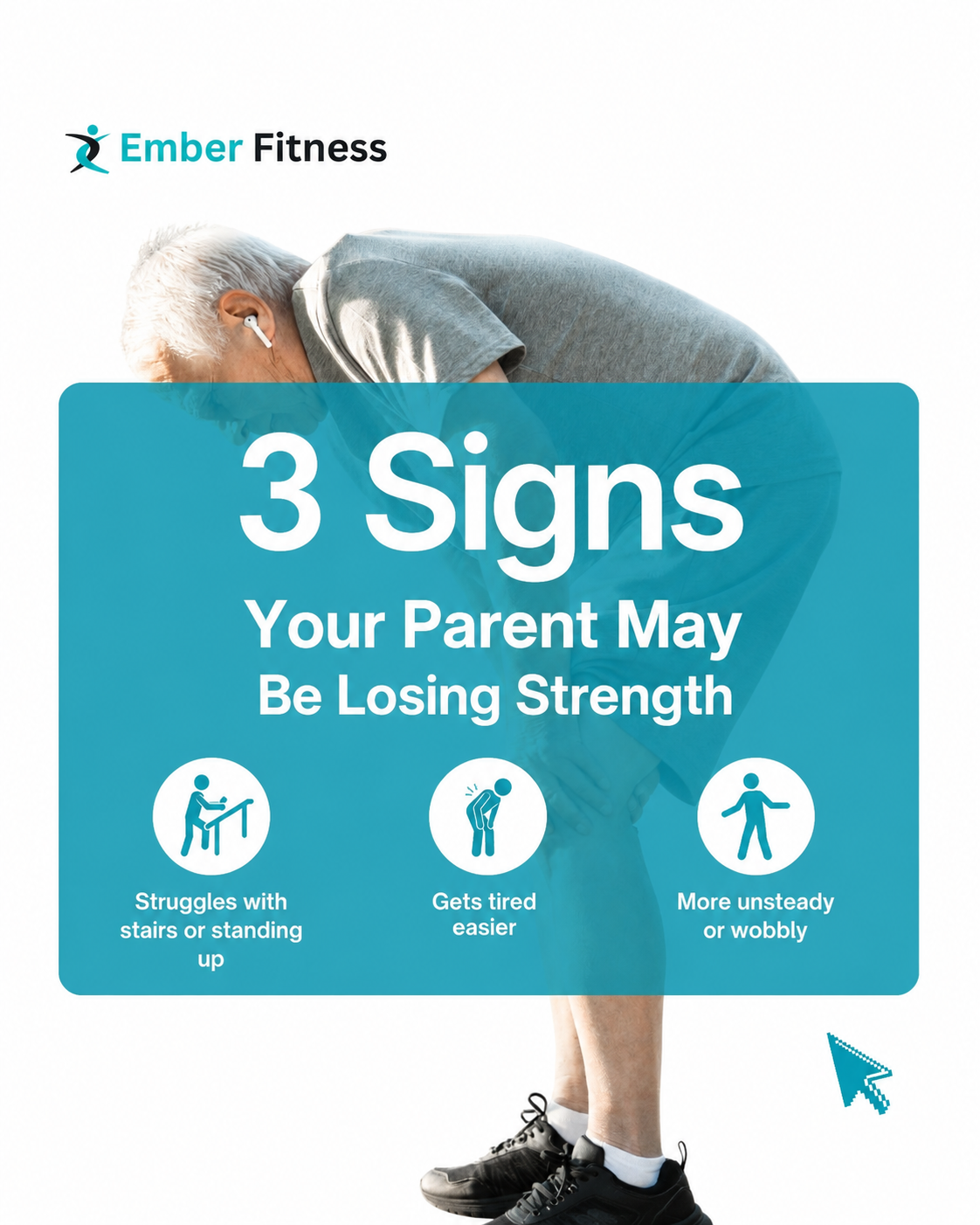
- Difficulty getting out of chairs
- Reduced walking speed
- Poor balance
- Frequent fatigue
- Loss of grip strength
- Stooped posture
- Fear of falling
- Recent falls or near-falls
Recognizing these signs early allows seniors to take action before major mobility problems develop.
How Strength Training Supports Bone Density
One of the biggest misconceptions about aging is that seniors should avoid resistance training.
In reality, properly guided strength training is one of the best ways to improve mobility, independence, and overall health.
Strength training helps:
✔ Build muscle mass
✔ Improve posture
✔ Increase stability
✔ Reduce fall risk
✔ Support joint function
✔ Improve confidence
✔ Support healthy bones
This is why strength training for osteoporosis is commonly recommended by health professionals.
Exercises such as chair squats, resistance band rows, wall push-ups, and standing balance work can help seniors safely improve both muscle strength and bone health.
The Importance of Bone Density for Seniors
Bone density refers to the strength and thickness of bones.
Low bone density increases fracture risk and can make recovery from falls significantly more difficult.
Fortunately, there are many ways seniors can support healthy bones.
Strategies for improving bone density in seniors include:
- Regular strength training
- Weight-bearing exercise
- Adequate calcium intake
- Vitamin D support
- Staying physically active
- Maintaining balance and mobility.
These healthy habits can help seniors remain independent longer.
Sample Strength & Bone Health Program
This beginner-friendly routine helps support muscle strength, mobility, and bone health.
| Exercise | Sets | Reps |
|---|---|---|
| Chair Squats | 2 | 8 –12 |
| Wall Push-Ups | 2 | 8 –10 |
| Resistance Band Rows | 2 | 10 –12 |
| Heel Raises | 2 | 15 |
| Side Leg Raises | 2 | 10 each side |
| Standing Balance Hold | 2 | 15 sec |
| Arm Raises | 2 | 12 |
Perform this routine 2–3 times weekly.
This program supports senior fitness and fall prevention while helping improve overall strength and mobility.
Why In-Home Personal Training Helps Seniors
Many older adults feel uncomfortable exercising in crowded gyms.
In-home personal training offers a safer and more convenient option.
Benefits include:
✔ Personalized workouts
✔ Reduced fall risk
✔ Comfortable environment
✔ Better consistency
✔ Exercises tailored to mobility level
✔ Improved confidence
At Ember Fitness, we bring professional senior fitness coaching directly into homes across Mississauga, Brampton, Oakville, Toronto, Etobicoke, North York, Milton, and Barrie.
Prevention Matters
The best time to address muscle loss and declining bone density is before a serious injury occurs.
Waiting until after a fall or fracture often makes recovery more challenging.
By staying active and focusing on strength and mobility early, seniors can continue enjoying everyday life with greater confidence and independence.
Frequently Asked Questions
Can seniors with osteoporosis exercise safely?
What type of exercise helps bone density most?
Can muscle strength improve after age 70?
How often should seniors strength train?
Conclusion
Conditions like sarcopenia and osteoporosis can affect mobility, confidence, and independence as we age, but they do not have to define the future.
With proper exercise, balance training, and healthy habits, seniors can maintain strength, support bone density, and reduce fall risk for years to come.
At Ember Fitness, we are proud to help seniors throughout Mississauga, Brampton, Oakville, Toronto, Etobicoke, North York, Milton, and Barrie stay active, strong, and independent through personalized in-home fitness programs.
It is never too late to begin investing in your strength, mobility, and long-term health.