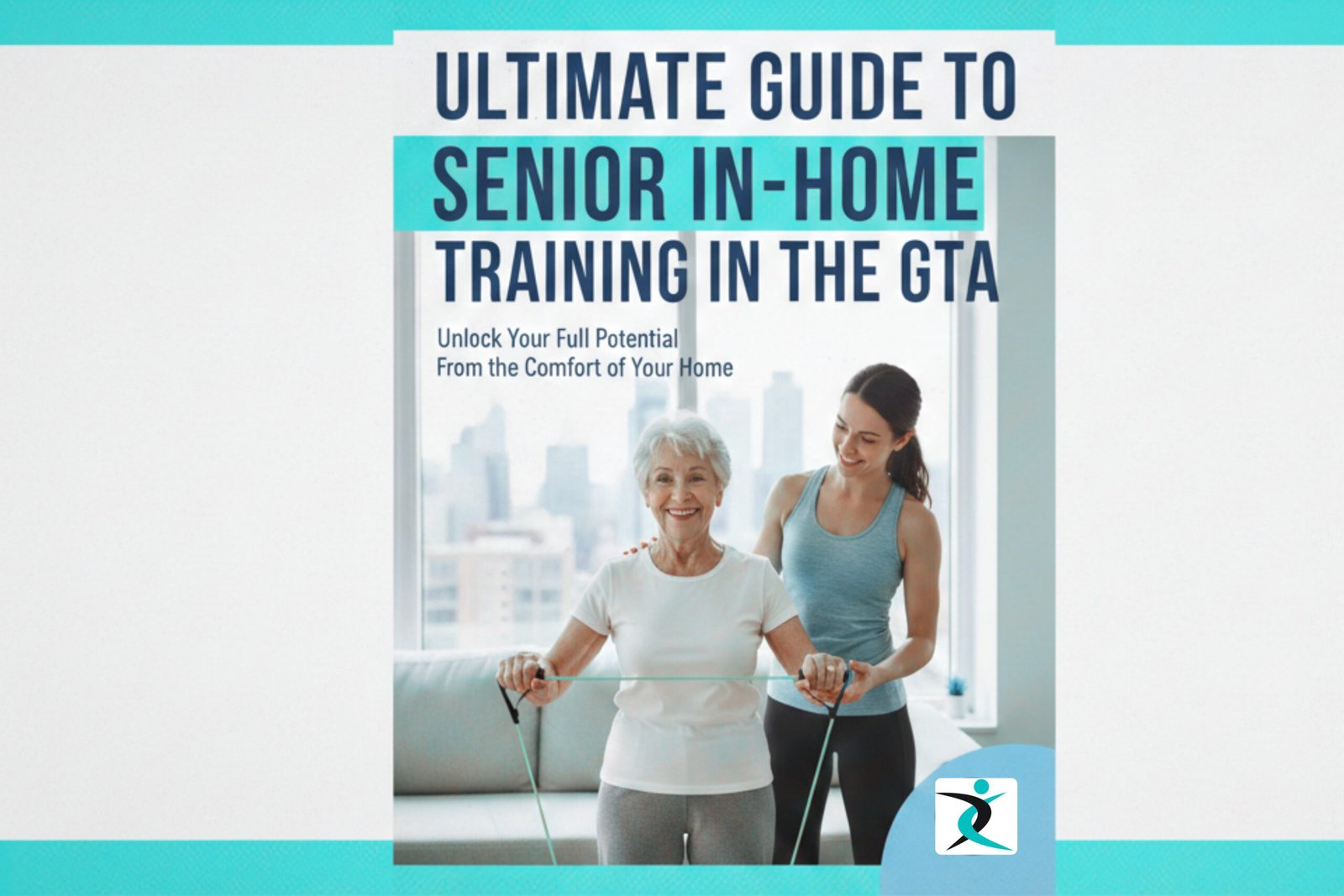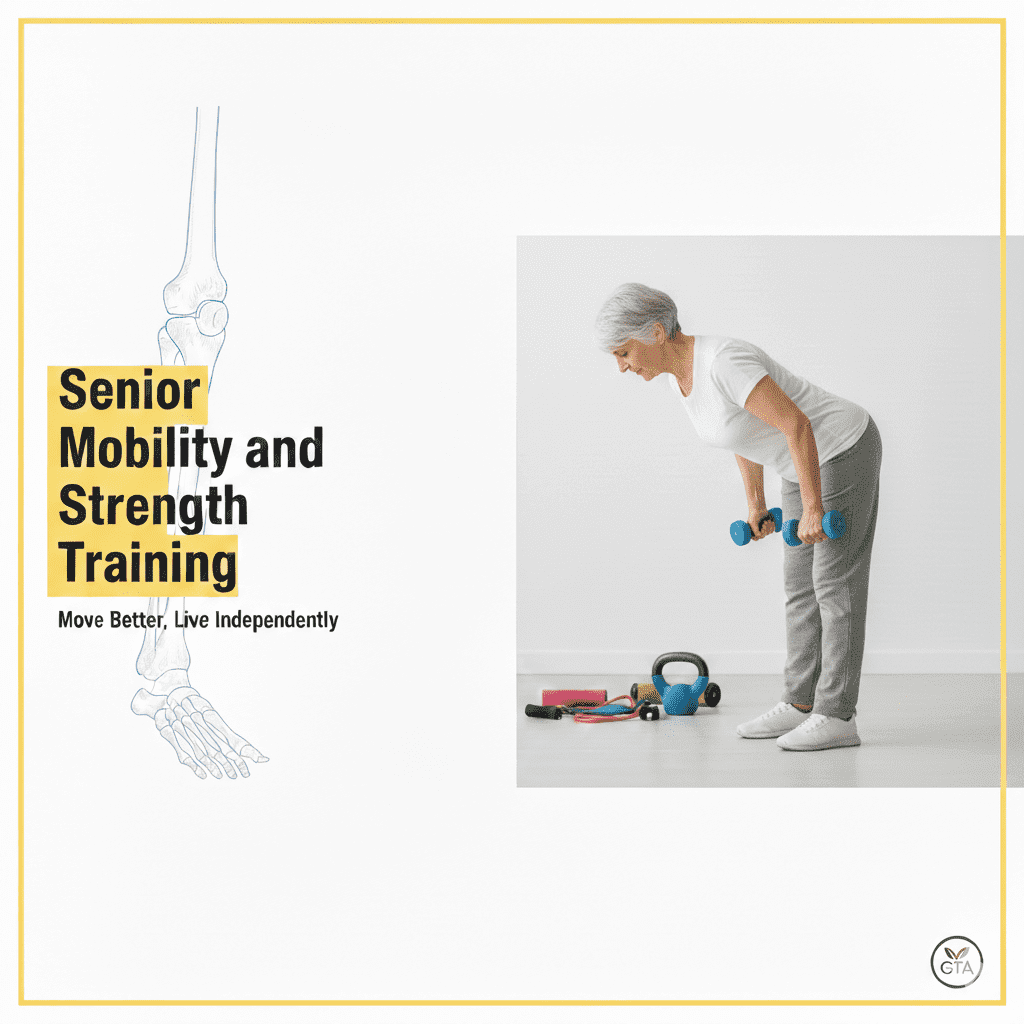
Senior mobility and strength training
The Crisis of Inactivity: Why We Lose Our Freedom
In the world of geriatrics, there is a common saying: “If you don’t use it, you lose it.” This isn’t just a cliché; it’s a biological reality. After the age of 50, the human body begins to lose muscle mass at a rate of about 1- 2% per year, a condition known as Sarcopenia. This loss of muscle is the primary driver of the “frailty cycle,” where seniors move less because they feel weak, which in turn makes them even weaker.
However, senior mobility and strength training acts as the ultimate intervention. By applying “progressive overload” the science of gradually increasing the difficulty of an exercise, seniors can actually reverse muscle loss and strengthen their bones, regardless of their starting point.
Understanding the Difference: Mobility vs. Flexibility
Many people confuse these two terms. Flexibility is the ability of a muscle to stretch (like a rubber band). Mobility, however, is the ability of a joint to move actively through a range of motion. For a senior, flexibility might help you reach your toes, but mobility is what allows you to climb stairs safely or get out of a low car seat.
Our focus on senior mobility and strength training tips prioritizes functional movements. We look at the “big three” joints: the hips, the shoulders, and the ankles. When these joints move well, the risk of a fall drops exponentially.
The Science of Strengthening: Why Resistance is Your Friend
Many seniors are afraid of “lifting weights” because they fear injury. In reality, the greatest injury risk for a senior is not lifting weights. Resistance training stimulates osteoblasts, the cells that build bone. This is the only natural way to combat osteoporosis.
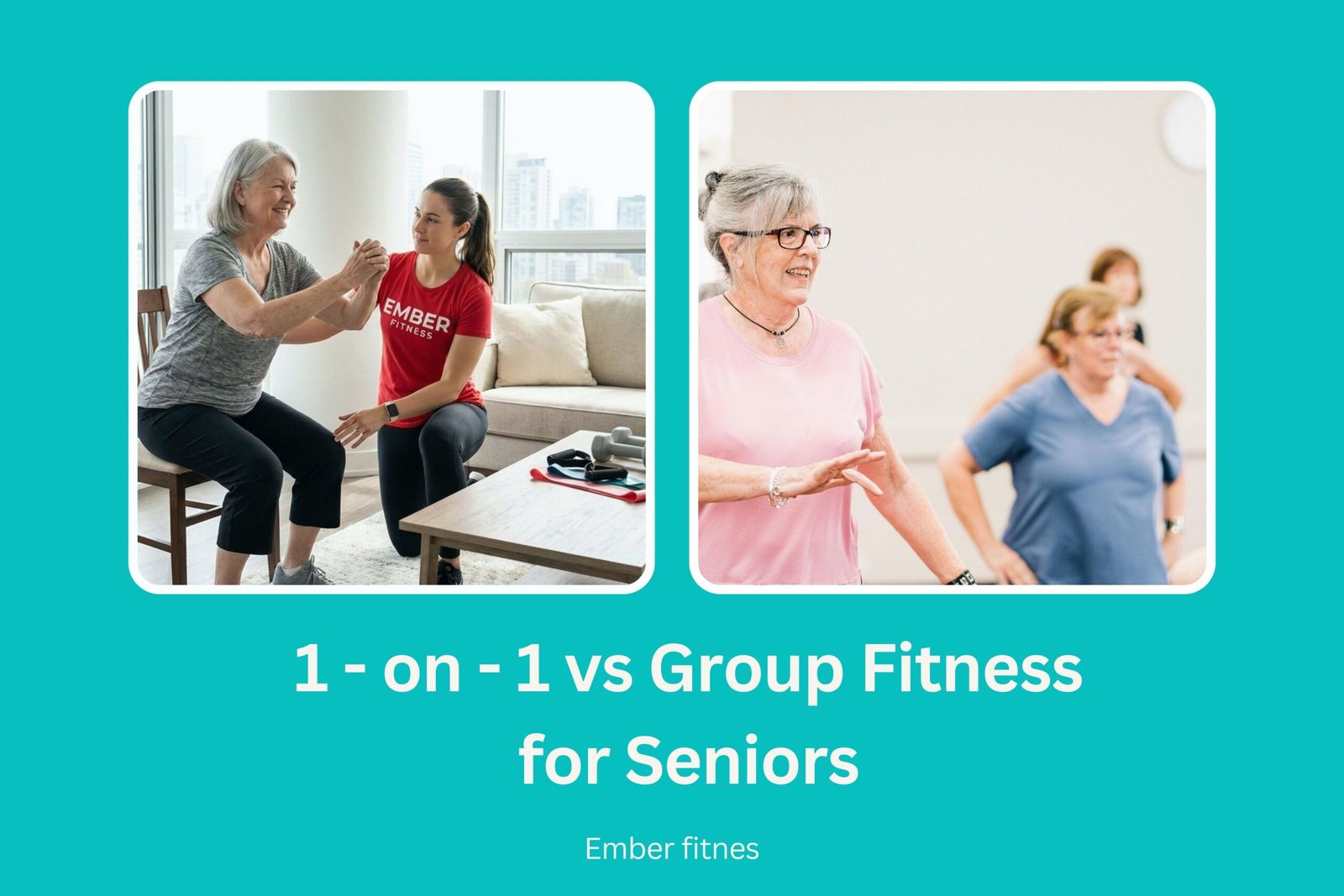
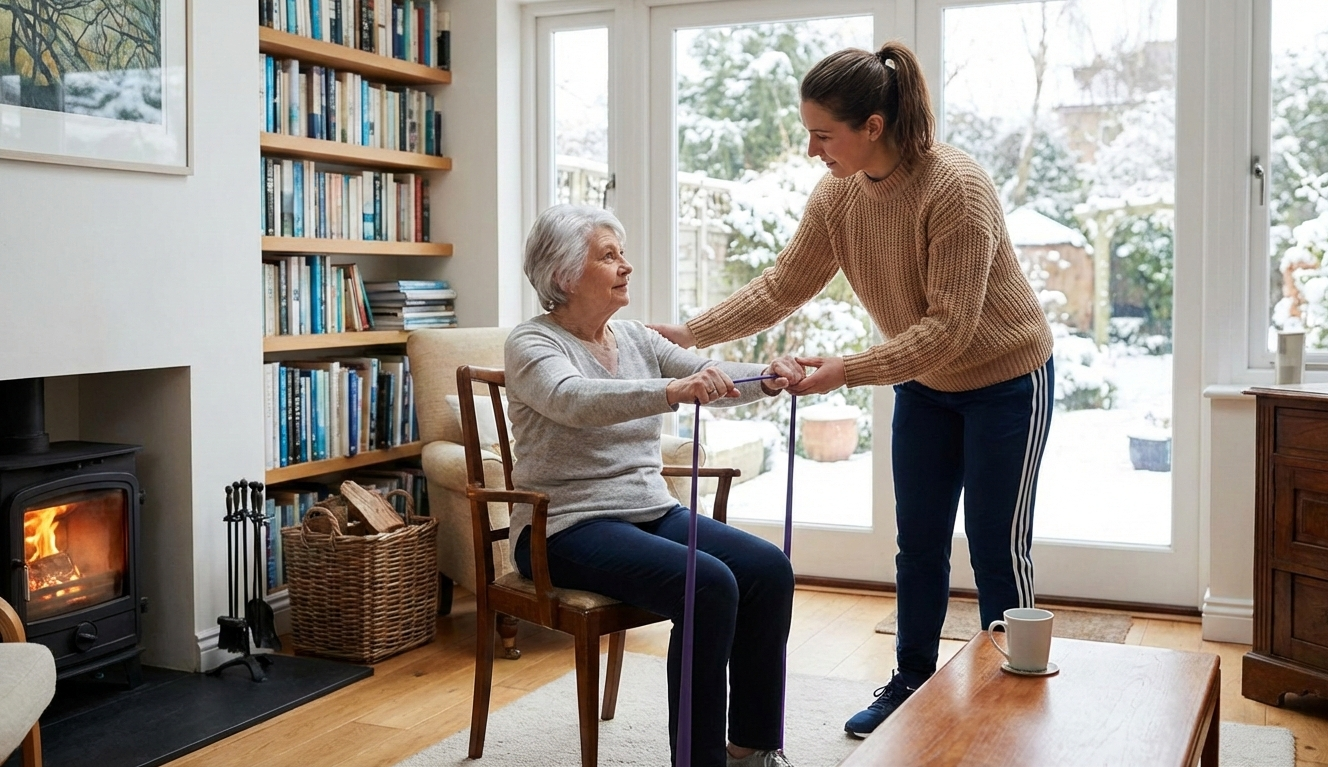
By helping seniors regain strength, we aren’t just building “vanity muscles.” We are building the “stability muscles” around the spine and knees. This is one of the most significant benefits of in-home personal trainers: having a professional present to ensure that the resistance you are using is safe, effective, and tailored to your specific bone density needs.
Fall Prevention: The Ultimate Goal of Senior Mobility and Strength Training
Falls are the leading cause of injury-related hospitalizations for Canadian seniors. A fall isn’t just a physical event; it’s a psychological one. Once a senior falls, they often develop a “fear of falling,” which leads to social isolation and a sedentary lifestyle.
Senior mobility and strength training breaks this cycle. We focus on “Proprioception”, your brain’s ability to know where your body is in space. Exercises like single-leg stands (with support) and “tandem walking” retrain the nervous system to react quickly if you trip on a rug or a curb.
The Psychological Impact: Regaining Your Confidence
Physical strength is inextricably linked to mental confidence. When you realize you can stand up from a chair without using your hands, your world expands. You start saying “yes” to walks in the park, trips to the grocery store, and playing with grandchildren.
This journey toward senior mobility and strength training is often best documented visually. We encourage our clients to watch our Web Stories to see real-life examples of how small, daily movements lead to massive changes in independence.
Building Your Home Recovery Routine
Strength training is only half the battle; recovery is where the “gains” happen. For seniors, this means prioritizing:
Protein Intake: To repair the micro-tears in muscle fibers caused by training.
Sleep: The time when the body releases growth hormones for tissue repair.
Hydration: Essential for maintaining the “fluidity” of your joints.
If you are unsure where to begin with these lifestyle changes, our all fitness resources page contains detailed guides on nutrition and recovery specifically for the elderly.
How to Get Started in the GTA
Whether you are in Mississauga, Milton, or Brampton, the first step is always an assessment. We look at your current gait, your balance, and your “functional reach.” We take these metrics seriously because they are the blueprint for your success.
Family members who are seeing a decline in their loved one’s mobility can use our Client Referrals Form to schedule a safe, in-home consultation. We also keep a detailed log of our service areas on our Locations page.
Conclusion: Independence is a Choice
Aging is mandatory, but becoming “old” is often optional. Through senior mobility and strength training, you are choosing to stay in your home longer, move with less pain, and live with more joy. Your body is capable of incredible things at any age, it just needs the right guidance.
Technical Breakdown & External Links
Osteoporosis Canada – Guidelines on bone health and exercise.
Cochrane Library: Exercise for preventing falls in older people – Systematic review of fall prevention data.