Personal Trainer vs Physiotherapist for Seniors – What’s the Difference?
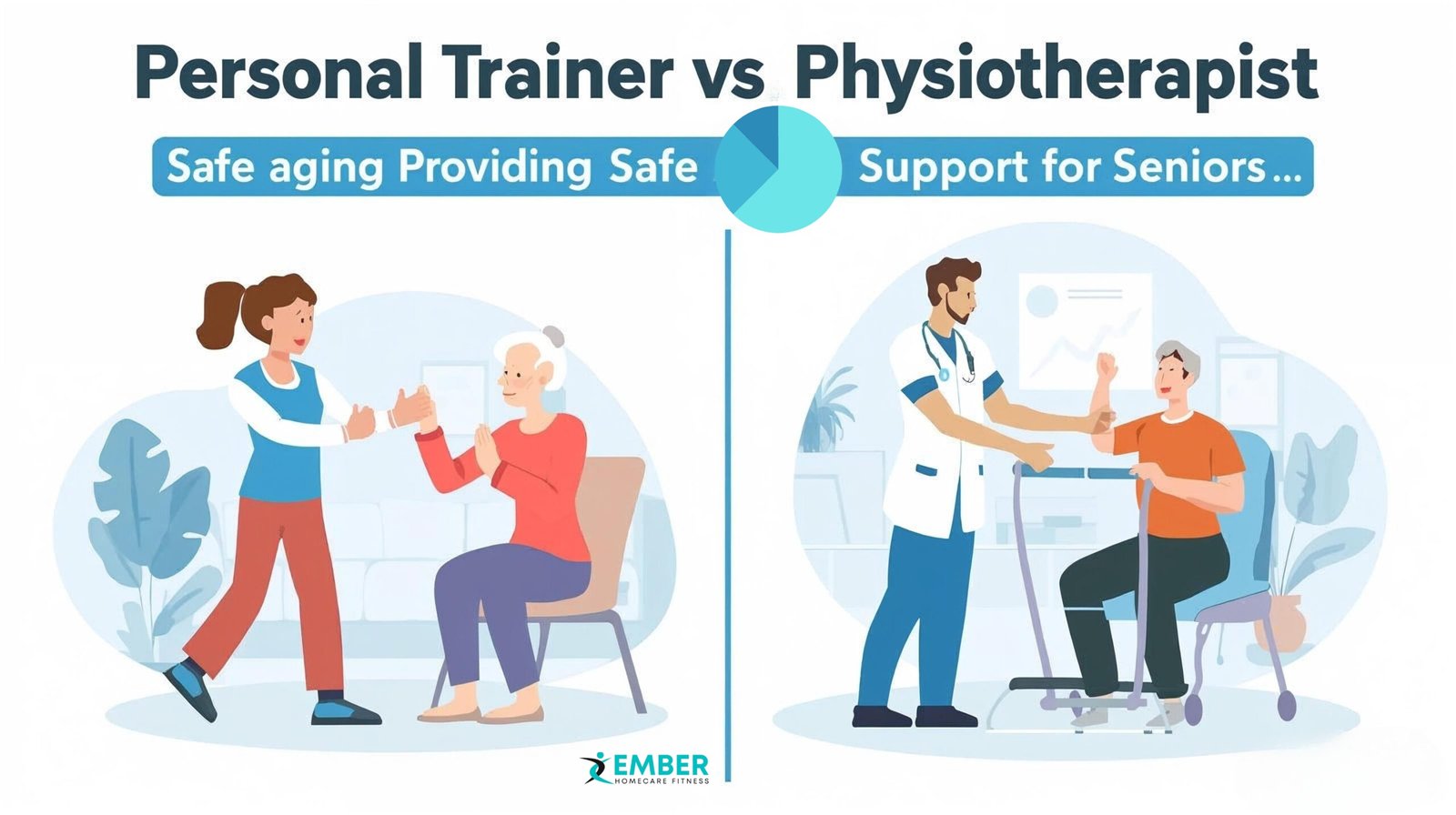
As seniors look for safe and effective ways to stay active, two professionals often come into the picture: personal trainer vs physiotherapist for seniors. Both play a role in senior health and fitness, but their expertise and focus areas differ. Understanding these differences helps older adults (and their families) make the right choice for safe aging, rehabilitation, and overall well-being.
1. Why Seniors Need Professional Support for Exercise
Aging brings changes such as:
Decreased bone density
Reduced muscle mass
Balance and coordination challenges
Increased risk of chronic conditions (arthritis, heart disease, diabetes)
Because of these factors, seniors benefit from guided exercise programs that address their unique needs. But should they work with a personal trainer or a physiotherapist?
2. What is a Personal Trainer for Seniors?

A personal trainer is a fitness professional certified to design and deliver customized exercise programs. For seniors, personal trainers:
Focus on strength, mobility, and endurance
Help build safe exercise habits at home or in fitness settings
Provide motivation and accountability
Adapt programs to suit medical conditions with physician clearance
Specialize in functional training (exercises that improve daily living activities)
👉 Example: A trainer may teach a senior safe squats to strengthen legs for climbing stairs or seated resistance exercises to improve posture.
3. What is a Physiotherapist?

A physiotherapist (physical therapist) is a licensed healthcare professional who diagnoses, treats, and rehabilitates injuries, illnesses, and chronic conditions. For seniors, physiotherapists:
Help recover from surgery or injury (e.g., hip replacement, stroke)
Manage chronic pain (arthritis, lower back pain, etc.)
Restore mobility after accidents or falls
Prescribe therapeutic exercises for rehabilitation, not just fitness
Use medical techniques such as manual therapy, ultrasound, or electrotherapy alongside exercise
👉 Example: A physiotherapist may guide a senior recovering from a knee replacement with progressive range-of-motion and strengthening exercises.
4. Personal Trainer vs. Physiotherapist – The Key Differences
| Feature | Personal Trainer | Physiotherapist |
|---|---|---|
| Focus | Fitness, strength, endurance, functional mobility | Rehabilitation, medical recovery, pain management |
| Setting | Gyms, homes, community centers, online | Clinics, hospitals, rehab centers |
| Certification | Fitness certifications (senior fitness, personal training) | University degree + licensing (regulated profession) |
| When to Choose | If the senior is healthy, cleared for exercise, and wants to get stronger/fitter | If the senior has an injury, surgery recovery, or medical condition needing rehab |
| Goal | Improve quality of life, independence, physical strength | Heal, restore mobility, manage medical issues |
5. Can Seniors Work With Both?
Yes! In fact, many seniors benefit most when personal trainers and physiotherapists work together.
A physiotherapist helps with recovery → then refers the client to a trainer for ongoing fitness.
A trainer notices mobility limitations → may recommend a physiotherapy assessment before continuing.
This combined approach ensures seniors stay safe while maximizing long-term health benefits.
6. Choosing the Right Option
Here are some quick guidelines:
Choose a physiotherapist if:
Recovering from surgery or injury
Experiencing pain or mobility loss
Diagnosed with a condition that requires rehab
Choose a personal trainer if:
You are generally healthy but want to improve strength, balance, or stamina
You want motivation and structured workouts
You are focused on prevention and independence
Add Your Heading Text Here
Here at Ember Fitness, we specialize in in-home senior personal training across Mississauga, Brampton, Oakville, Etobicoke, Toronto, Milton, and North York.
Our trainers:
Provide safe, adapted exercise for seniors
Focus on fall prevention, flexibility, and strength building
Work closely with healthcare providers when needed
Bring training directly to your home for comfort and convenience
Conclusion
The question isn’t personal trainer vs. physiotherapist for seniors , it’s about knowing when each is needed. Physiotherapists help with recovery and medical rehab, while personal trainers build long-term strength and independence.
Together, both professionals can help seniors age actively, prevent falls, and live healthier, fuller lives.